


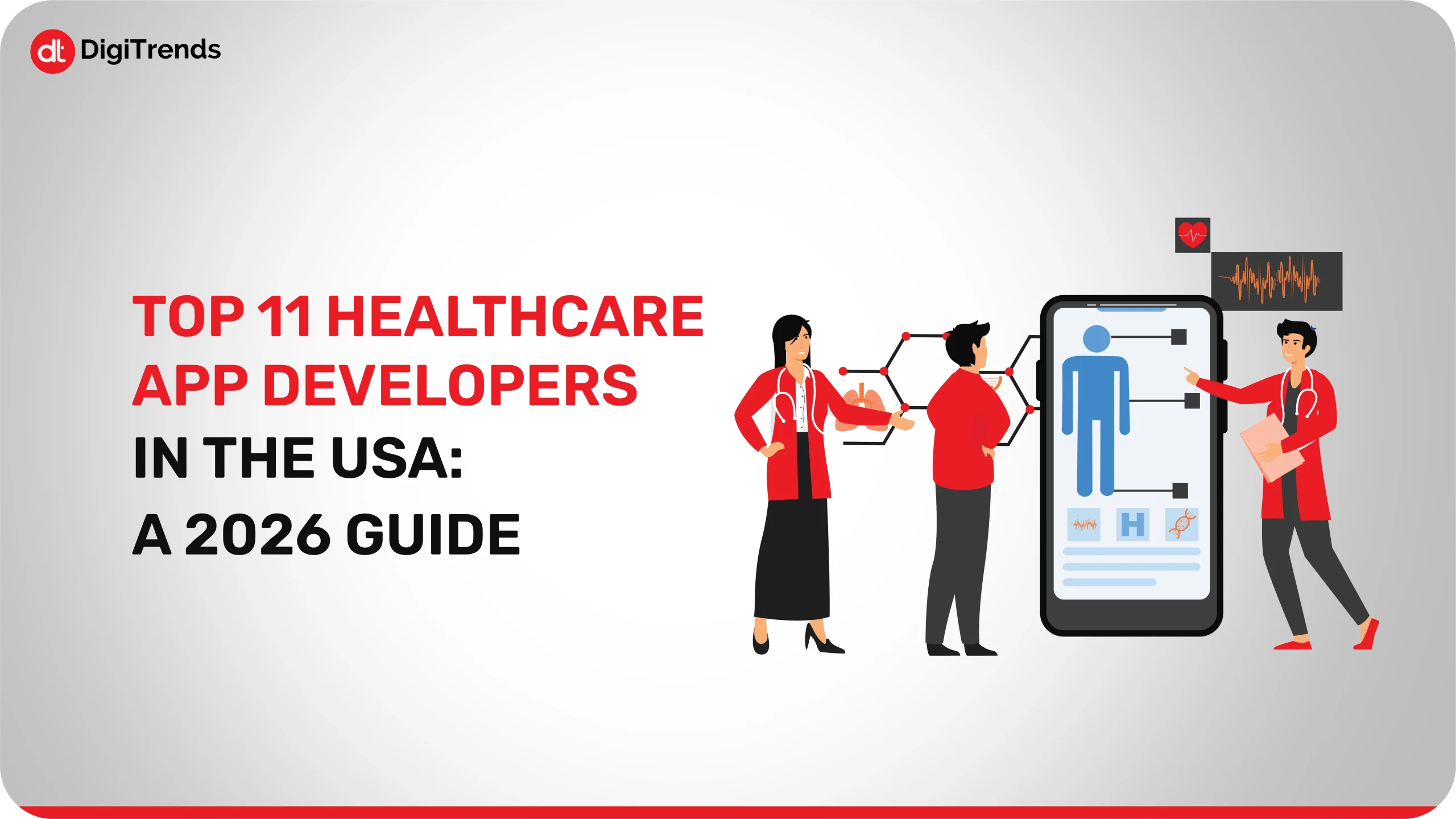
Top 11 Healthcare App Developers in the USA: A 2026 Guide
Have a look at the top 11 healthcare app developers in the USA in 2026 and what makes them stand out.
Continue Reading
We build AI-powered software solutions designed to transform your vision into powerful, results-driven applications.
Providing Avant-Garde Mobile App Solutions.
Powerful apps made for the Apple ecosystem
Scalable apps built for android
Single codebase apps that work across platforms
Efficient apps built using React Native
High-performance apps made using Flutter
Providing Bespoke Mobile Game Development Services.
Delivering Innovative And Avant- Garde AR Solutions.
Our VR Development Services Allow Interaction With Simulated Surroundings.
Customised mobile apps for your Shopify shopfront.
Web Development Services With A Stellar Record Of Excellence.
Providing Web Design Services For All Industries.
Offering Custom And Robust PWA Solutions.
Bespoke E-Commerce Solutions For All Industries.
An Exceptional Success Record In CMS Development Services.
Customised software solutions to match corporate requirements.
Providing Business With Bespoke MVP Development Solutions.
DigiTrends Produces Essential Custom Software Solutions.
Transforming Brands With Innovative Digital Marketing.
AI-Powered Solutions. Wide-Ranging Industries. From finance to healthcare, our intelligent technologies drive innovation across every sector.
Revolutionizing Financial Services with Innovative Technology Solutions
Developing digital software to upgrade healthcare
Innovating learning experience with technology
Helping you step up your advertisement game
Reshaping automotive business experiences with tech
Transforming Real Estate with digital solutions
Digitalizing hospitality management with e-solution
Transforming the retail industry for with digital transformation
Transforming data into intelligent insights that drive innovation across multiple industries.
Delivering exceptional services across different cities, innovating here; and thriving everywhere!
Seek exceptional mobile app development in Delaware.
Where creativity and tech unite for innovation.
Seek advanced mobile app development in LA.
Unleash your business with our innovative mobile apps
Step into Austin’s mobile innovation hub.
Each business is unique; tailored approaches for all.
Leaders of mobile app development in Saudi Arabia
Meet the best app developers in Dubai
Meet the Nordik mobile development experts

 15 January 2026
 3 months ago
 217 Views


Since lockdown, the on-demand delivery app demand went up and has not come down since. Now, as we have entered 2026, this demand is only increasing, and for drivers, the question of which delivery app pays the most has never been more important.
Numerous platforms are now competing for users in 2026, but not every delivery app that makes money is created with the same features. As a delivery rider, your earnings can depend on multiple factors such as location, demand, and hours worked, but some apps clearly offer higher earning potential.
Top-paying delivery jobs aren’t just about base pay. Features like smart routing, dynamic pricing, in-app incentives, and seamless user experiences directly impact how much couriers can earn. Delivery companies’ payment comparison depends on the technology, platform strategies, and operational design a lot; these are the factors that decide which delivery company’s rider will get paid the most.
In this guide, we break down the apps to make money delivering, reveal which ones offer the best payouts, and show how the top platforms combine smart technology and incentives to keep drivers earning more in 2026.
If you want to know which delivery app pays the most to riders in 2026, then you are at the right place. We have created a list of the 9 top apps to make money delivering for you. All these apps offer top-paying delivery jobs, bonuses, and flexibility. Let’s have a look.
If you want to know which delivery app pays the most to riders in 2026, then you are at the right place. We have created a list of the 9 top apps to make money delivering for you. All these apps offer top-paying delivery jobs, bonuses, and flexibility. Let’s have a look.
Founded: 2013
Average Earnings: $20–$25 per hour
Bonus/Incentives: High pay, bonus-based challenges, tips
DoorDash is a famous food delivery app that is considered one of the top-paying delivery jobs. Earnings on this app come from base pay, peak-time incentives, and customer tips. The app also offers a feature called “Challenges,” where delivery drivers can take on a challenge of completing a set number of deliveries within a set time. If they complete these challenges, they get bonuses.
Pro Tip: Focus on peak meal hours and prioritize high-tip orders from busy restaurants.
Pros:
Cons:
Founded: 2014
Average Earnings: $18–$26 per hour
Bonus/Incentives: Surge pricing, reward-based quests, tips
Uber Eats delivery app offers strong earning potential during high-demand periods thanks to surge pricing. Drivers benefit from smart order allocation and real-time demand tracking.
Its flexibility makes it appealing for drivers who want to switch between rides and deliveries.
Pro Tip: Drive during events, weekends, and bad weather to maximize surge pay.
Pros:
Cons:
Founded: 2012
Average Earnings: $20–$30 per hour
Bonus/Incentives: Batch pay, tips, promotions
Instacart is ideal for drivers willing to shop and deliver. With Instacart, delivery riders can actually enter the market, select items based on customers’ demand, and even choose alternatives all by themselves. Larger orders and customer tips significantly boost earnings, making it one of the top-paying delivery jobs for experienced shoppers.
Efficiency and speed play a big role in income growth.
Pro Tip: Accept batch orders from high-rated customers to increase per-hour earnings.
Pros:
Cons:
Founded: 2015
Average Earnings: $18–$28 per hour
Bonus/Incentives: Scheduled blocks, surge blocks
Amazon Flex offers upfront pay with scheduled delivery blocks, appealing to drivers who prefer income predictability over tips.
It’s often ranked high in delivery apps to make money due to reliable demand.
Pro Tip: Grab surge blocks during peak seasons for higher guaranteed rates.
Pros:
Cons:
Founded: 2004
Average Earnings: $15–$23 per hour
Bonus/Incentives: Contribution pay, tips
Grubhub remains competitive in select markets. Contribution pay ensures drivers earn a minimum hourly rate when order volume is low.
This makes it attractive in cities with consistent demand.
Pro Tip: Schedule blocks in advance to unlock guaranteed pay.
Pros:
Cons:
Founded: 2011
Average Earnings: $18–$24 per hour
Bonus/Incentives: Blitz pricing, tips
Postmates focuses on city-based deliveries, including food and retail items. Earnings improve significantly during high-demand periods and promotional blitz pricing.
Pro Tip: Stick to dense urban zones to reduce travel time.
Pros:
Cons:
Founded: 2014
Average Earnings: $20–$28 per hour
Bonus/Incentives: Customer tips, bonuses
Shipt caters to a more premium customer base, which often translates into higher tips. Experienced shoppers can earn well with repeat customers.
Pro Tip: Build relationships with regular customers for better tips.
Pros:
Cons:
Founded: 2013
Average Earnings: $17–$25 per hour
Bonus/Incentives: Hourly pay, tips
Gopuff offers a warehouse-based delivery model, reducing restaurant wait times. Fixed hourly pay combined with tips creates stable earnings.
Pro Tip: Choose evening shifts when order volume is highest.
Pros:
Cons:
Founded: 2011
Average Earnings: $20–$27 per hour
Bonus/Incentives: Tips, peak pay
Caviar specializes in high-end restaurant deliveries, often resulting in larger order values and better tips. While availability is limited, payouts are competitive.
Pro Tip: Focus on upscale neighborhoods during dinner hours.
Pros:
Cons:
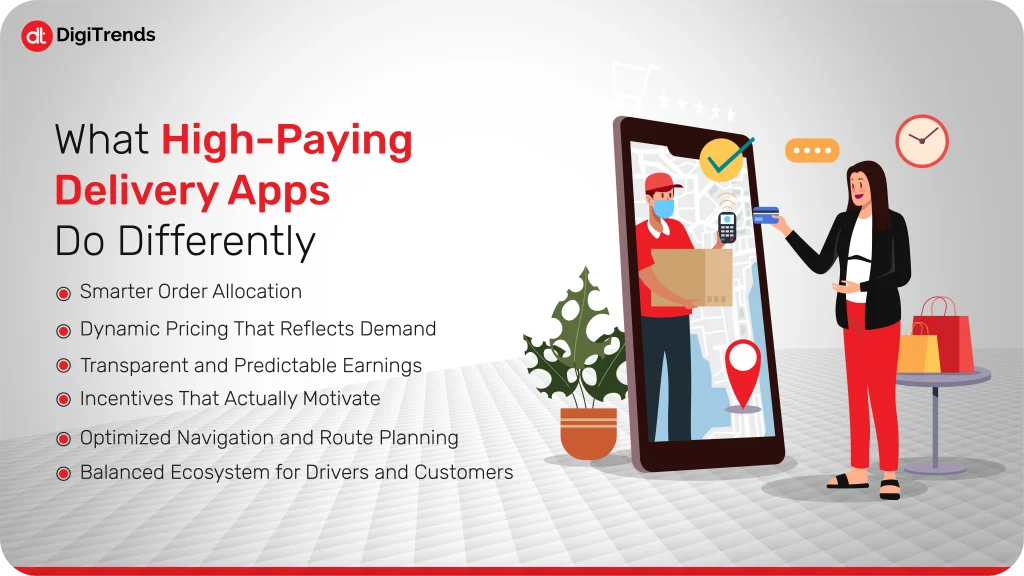
High-paying delivery apps don’t rely on luck, aggressive marketing, or driver overwork. They earn more because they are built differently. When you look closely at which delivery app pays the most, a clear pattern emerges. The highest earners operate on smarter systems where technology, incentives, and user experience work together.
Top delivery apps use intelligent matching algorithms that reduce idle time. Orders are assigned based on driver proximity, traffic conditions, and delivery history. This means fewer rejected orders, shorter routes, and more completed deliveries per hour. For drivers, that translates directly into higher earnings without extra effort.
High-paying apps adjust payouts in real time. Surge pricing, peak pay, and time-based bonuses are triggered by demand spikes, weather conditions, and local events. Instead of fixed rates, drivers are rewarded when demand is highest, which is why top-paying delivery jobs consistently outperform flat-fee platforms.
Drivers stay longer on platforms that clearly show how payouts are calculated. Leading delivery apps break down base pay, incentives, and tips upfront. This transparency helps drivers make smarter decisions about which orders to accept, improving overall income and trust in the platform.
Bonuses on high-paying delivery apps are tied to realistic goals. Challenges, guaranteed minimums, and streak-based rewards are designed around achievable delivery volumes. These incentives increase engagement without pushing drivers into burnout, making the platform more sustainable for long-term earnings.
Navigation is not just a map feature. High-performing apps integrate traffic data, real-time rerouting, and drop-off optimization into the driver experience. Faster routes mean more deliveries completed in less time, which is a major factor when comparing delivery apps to make money.
What truly sets high-paying delivery apps apart is balance. Strong customer experiences drive higher order volume and better tips, while driver-focused features improve retention and performance. From seamless payments to responsive support, every part of the ecosystem is designed to keep deliveries moving efficiently.
When these features come together, the result is a platform where drivers earn more per hour, and businesses scale faster. This is why food delivery companies’ payment comparison often favors apps with advanced digital infrastructure. High earnings are not accidental. They are the outcome of deliberate delivery app development choices that prioritize efficiency, transparency, and user satisfaction.
Technology is transforming how food reaches customers and how drivers earn. Delivery platforms are adopting automation, predictive systems, and smarter pricing to stay competitive:
Drones and robots are starting to handle last-mile deliveries, reducing wait times and opening new earning opportunities for human drivers who manage high-demand routes.
Connected devices like smart fridges can automatically place grocery or meal orders, increasing order volume and consistency for delivery platforms.
Voice-activated devices, wearables, and home assistants make placing orders faster and more convenient, boosting overall delivery demand.
Augmented reality allows customers to preview meals and customize orders, improving satisfaction and encouraging repeat business.
Platforms are integrating predictive tools to suggest meals based on nutritional needs or health goals, driving demand for specialized deliveries.
Real-time surge pricing, time-based bonuses, and demand-responsive pay ensure drivers are rewarded when deliveries are busiest.
Decentralized kitchens and neighborhood micro-hubs are being adopted by businesses that shorten delivery routes, increasing efficiency and earnings per trip.
Data-driven insights, including dietary preferences and even DNA-based suggestions, help platforms tailor orders, enhancing customer loyalty and order frequency.
These trends don’t just change how food is delivered; they shape how drivers earn. Apps that leverage technology, smart pricing, and customer-focused innovation consistently offer higher pay, better incentives, and more predictable work for delivery professionals.
Not every delivery job that looks good on paper actually pays well in practice. When drivers compare options and ask which delivery app pays the most, the real answer lies in how the job is structured day to day. High-paying delivery jobs share a few consistent traits that make earnings more predictable and sustainable.
Earnings start with order volume. Apps with high local demand allow drivers to complete more deliveries per hour with less downtime. Before committing, check how active the platform is in your city, especially during lunch and dinner rushes.
High-paying delivery jobs don’t hide how money is calculated. Look for apps that clearly separate base pay, bonuses, and tips. Transparency helps you decide which orders are worth your time and prevents surprises at the end of a shift.
Peak pay, guaranteed hourly minimums, and delivery challenges can significantly increase income. The best delivery apps to make money offer incentives that are achievable, consistent, and tied to realistic delivery volumes rather than impossible targets.
A smooth app experience matters more than most drivers realize. Fast order acceptance, accurate navigation, and real-time updates reduce wasted time. The less friction you face between pickups and drop-offs, the more deliveries you can complete per hour.
Tips often make the difference between average and top-paying delivery jobs. Apps that serve premium restaurants, grocery orders, or repeat customers usually deliver higher tipping behavior and better overall earnings.
High-paying delivery jobs give drivers control over schedules without harsh penalties for rejecting low-paying orders. Flexibility allows drivers to work only during profitable hours instead of staying online during slow periods.
Delays, cancellations, and payment issues happen. What matters is how quickly support responds. Reliable driver support protects your time and income, especially during peak earning windows.
Most delivery drivers earn between $15 and $40 an hour, depending on what they are delivering. But top earners make more by working smarter and more efficiently. Location is key. Busy city areas mean more orders, shorter trips, and better tips.
Timing matters just as much. Lunch rushes, dinner hours, and weekends unlock higher payouts and bonuses. The type of delivery also plays a role. Grocery and parcel orders often yield higher earnings per trip than standard food deliveries.
Bonuses and incentives can significantly raise your income, especially when you plan around them. And good service still counts. Faster deliveries and clear communication often lead to better tips.
The takeaway is simple. Choose the right platform, work high-demand hours, and understand how pay works if you want to earn more consistently.
So, which delivery app pays the most in 2026? There isn’t one universal winner. The highest-paying apps are the ones built to reward drivers for time, efficiency, and smart decision-making. Earnings depend on where you drive, when you work, and how well the platform’s features support you.
What’s clear is this: high-paying delivery apps don’t happen by accident. They combine strong demand, transparent payouts, smart routing, and meaningful incentives to help drivers earn more per hour with less frustration. When those elements work together, both drivers and platforms win.
For drivers, the opportunity lies in choosing the right app, understanding how pay is structured, and working during the most profitable hours. For businesses and founders, the takeaway is just as important. Delivery platforms that invest in innovative app development, data-driven systems, and user-focused design are the ones that attract drivers, scale faster, and stay competitive.
In a crowded gig economy, the apps that pay more are simply the ones built better.
Have a look at the top 11 healthcare app developers in the USA in 2026 and what makes them stand out.
Continue Reading

Explore the mobile app marketing trends in 2026 that are important for an app to grow in this market.
Continue Reading

Explore an effective roadmap for custom application development that leaders need to understand, plan, and implement.
Continue Reading
Explore what Proof of Concept (PoC) in software development is, how it benefits teams in making better decisions, and how it works.
Continue Reading
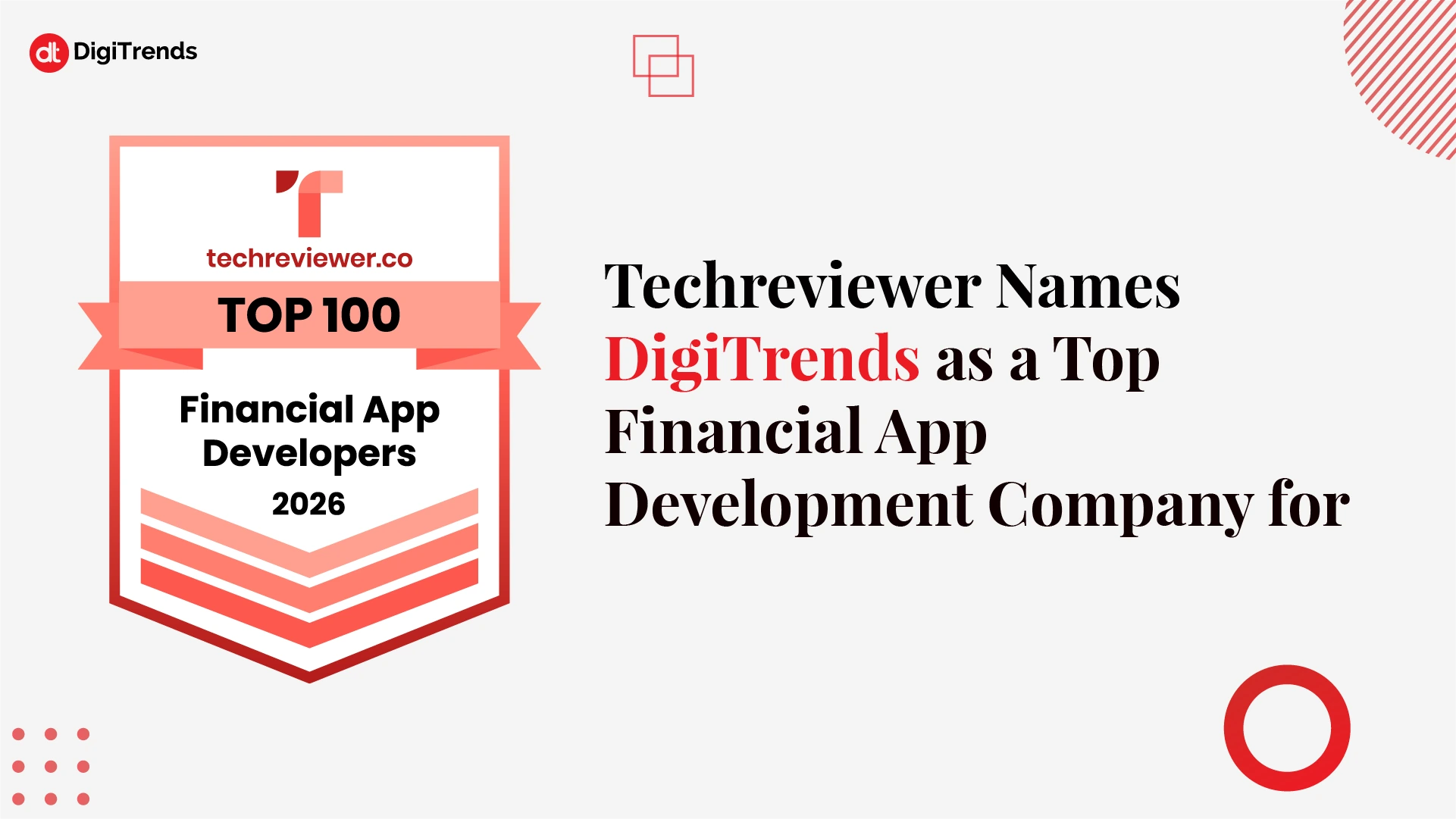
DigiTrends has been officially recognized by Techreviewer.co as one of the Top Financial App Development Companies for 2025.
Continue Reading
Have a look at the top 20 best offline music apps with which you can enjoy your music without any issues.
Continue Reading