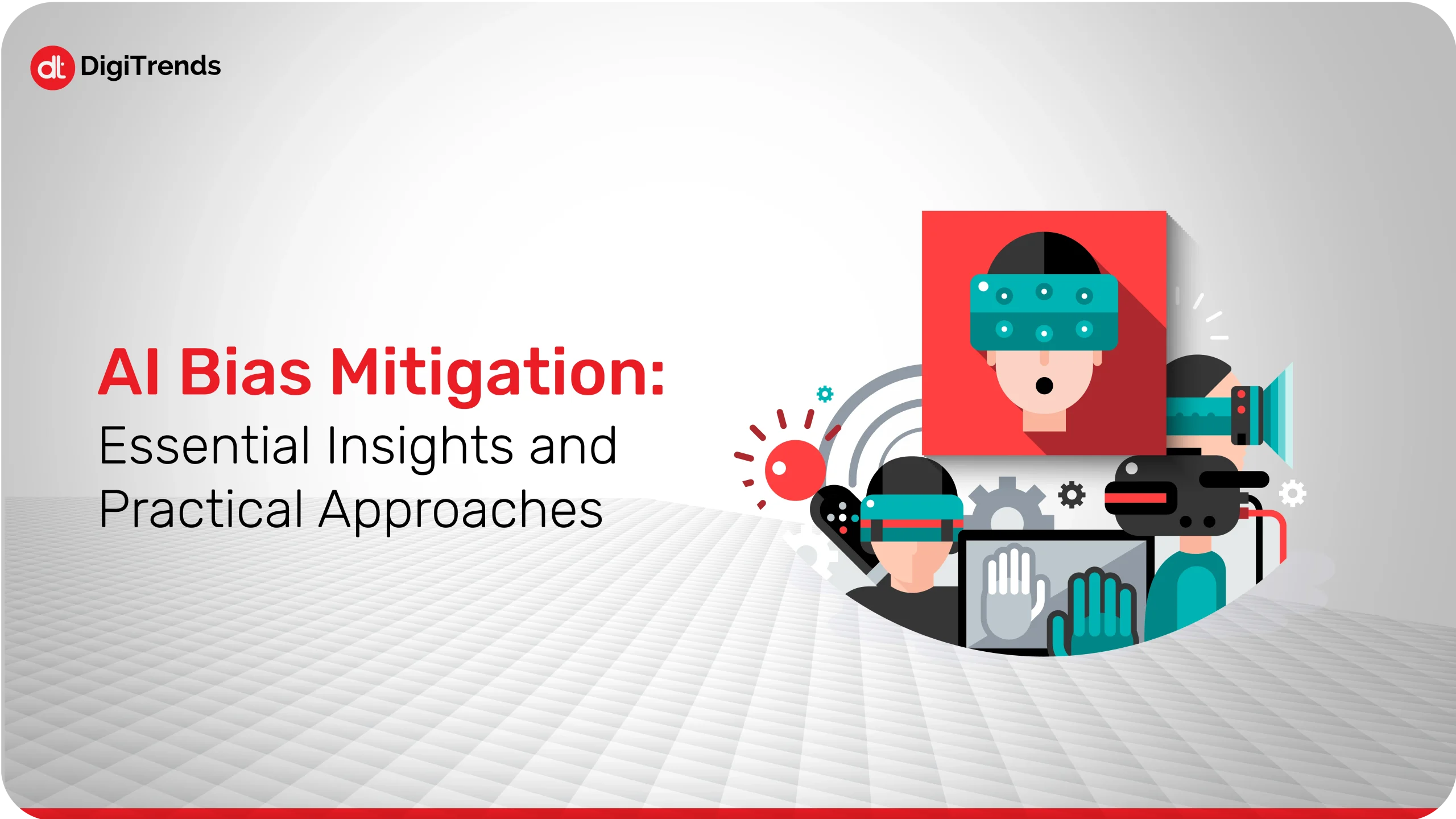
AI Bias Mitigation: Essential Insights and Practical Approaches
Published
12 January 2026
Time
8 months ago
Views
1012 Views
Muhammad Ishaque
As the SEO Manager at DigiTrends, Muhammad leads organic growth initiatives by developing and executing data-driven SEO strategies that improve search visibility, drive qualified traffic, and support business growth. With extensive experience in technical SEO, on-page optimization, content strategy, keyword research, and performance analysis, he focuses on delivering sustainable search results that align with business objectives. His ability to identify search opportunities, analyze market trends, and implement scalable SEO solutions helps businesses strengthen their digital presence and achieve long-term success.
Table Of content
Share This Article
When you think of AI systems, you probably think of your favorite AI model summarizing a long tedious report or quickly drafting up an email for you.
From a business standpoint, it can be super efficient in figuring out who gets loans, recommend the best candidates for the job, and more.
But what if I were to tell you that a person’s experience with AI differs greatly depending on who is using it.
Sadly, this is the reality with many current AI deployments with AI systems widely known for discriminating against certain groups.
The thing with AI models is that these models learn from the data and from the decisions made during development. This is where AI bias enters the picture. If that data and decisions are biased, it can result in the AI model reflecting that bias. Bias can distort outcomes, reinforce inequalities, and even put organizations at risk of legal or reputational damage.
This is why AI bias mitigation is not an option but a necessary step. Many companies have realized that using AI models responsibly isn’t just ethically correct, but it is also important for long-term business success. This is because, for business, AI bias consequences can be dramatic at times.
For example, if the algorithm is trained on historical employee data, the data might systematically favor certain demographics, and generative AI can repeat and amplify biases hidden deep within the data. If bias detection and mitigation are not built into these systems, the outputs can promote stereotypes or present one-sided views. Over time, this can reduce trust in AI and in the organizations that use it.
The consequences are greater with generative AI, which generates text, images, and audio through learned patterns. Generative AI is not like traditional AI, which gives responses and predictions based on structured data. In this model, there are chances of AI producing responses based on biases deeply embedded in huge datasets. So, without proper bias detection and mitigation in generative AI, the outputs can be unintentionally stereotypical and biased, which makes AI models unreliable.
If we look at this issue after keeping social and ethical implications out of the picture, businesses have a lot at stake when it comes to AI bias. Biased AI can lead businesses to unstructured insights, poor making, and in some cases, regulatory fines, too. Organizations that prioritize AI bias mitigation techniques are better positioned to create fair, reliable, and accountable AI systems, strengthening both user trust and competitive advantage.
In this blog, we’ll break down the origins of bias, explore proven AI bias mitigation techniques, and dive into methods for detecting and correcting bias, including in AI assistants and generative models. By the end, you’ll have a comprehensive understanding of how to approach bias in AI models, why it matters, and practical ways to integrate mitigation strategies into your AI development workflow.
What Causes Bias in AI Models
Before we get into understanding the effective steps towards AI bias mitigation, it is important to look into the reasons why bias appears in AI models.
AI bias does not happen randomly; there are some factors behind it, like data, algorithms, and the humans designing and interacting with the system. If you are looking to reduce bias effectively, it is important that you first recognize its sources and how they can influence outcomes.
1. Dataset Bias
There is no doubt in the fact that data is the foundation of AI; hence, biased AI produces biased AI models.
When does dataset bias occur?
It occurs when the data that the AI model is trained on is unrepresentative, incomplete, or skewed. Have a look at the common sources:
– Sampling bias: Sampling bias happens when certain groups or situations are underrepresented, the AI model is trained on it, and only favors the scenarios it is fed. For example, if a facial recognition model is trained mostly on lighter skin tones will perform poorly on darker skin tones.
– Labeling bias: When labeling data, human annotators may inadvertently introduce bias. For example, the annotator’s personal presumptions may be reflected in the subjective labeling of sentiment or intent in natural language datasets.
– Historical bias: Even if the data is collected perfectly, it does not confirm no bias. If the data is from decades of discriminatory practices, it will teach the model to replicate those patterns.
Dataset bias is particularly critical in generative AI systems. Generative AI is trained and operated on data taken from the internet, and this data contains stereotypes, misinformation, or imbalances, which are then found in the model’s outputs. If AI bias detection and mitigation are not proper, these biases can grow at scale.
2. Algorithmic Bias
Even the clean data is not spared by the curse of bias; algorithms can sometimes themselves introduce bias. This happens when model assumptions, design choices, or optimization goals accidentally favor certain outcomes. Have a look at common examples:
– Objective function bias: When a model prioritizes accuracy over fairness, it can be disadvantageous for minority groups while sticking to maximizing its overall performance.
– Feature selection bias: Choosing certain features without considering their social implications can encode hidden biases. For instance, zip codes might act as proxies for race or income, unintentionally distorting predictions.
– Model architecture bias: Some algorithms handle imbalance better than others. A simple model may overfit to the majority groups, resulting in unequal performance across demographics.
Algorithmic bias can be subtle, and it often requires careful auditing and AI bias mitigation techniques to detect and correct it.
3. Human Bias
AI is a reflection of human decisions, and this is why bias can enter through multiple entry points during the development phase. Let’s have a look:
– Design bias: Humans make choices about which problems to solve, which data to collect, or which user groups to prioritize shape the entire perspective of the AI model.
– Confirmation bias: Developers might make the mistake of favoring results that are according to their expectations; in this process, unfair outcomes are pushed without any evidence.
– Feedback loops: Human interaction with the model can also force bias with time. For example, if it gets biased recommendations in a content platform to influence user behavior, the model will get trained, and the results will be biased according to what the model is trained on.
Finding out human bias requires cross-functional collaboration between data scientists, domain experts, and auditors, ensuring diverse perspectives inform AI design and evaluation.
4. Bias in Generative AI
Generative AI models, which create text, images, or audio, have unique bias challenges. Unlike predictive models, they learn patterns from massive, uncurated datasets, making them prone to:
– Stereotype amplification: When an AI repeats and strengthens stereotypes that already exist in its training data, making certain groups appear unfairly negatively or exaggeratedly.
– Context insensitivity: When an AI gives answers that sound reasonable but ignore the situation or background, leading to wrong or harmful assumptions.
– Content drift: When an AI slowly moves away from balanced and neutral responses over time because of ongoing interactions with users or new data.
Mitigating bias in generative AI requires specialized detection methods and iterative adjustment.
Sources of Bias in AI Models
Source of Bias
Key Examples
Impact on AI Model
Dataset Bias
Sampling, labeling, and historical bias
Skewed predictions, poor fairness
Algorithmic Bias
Feature selection, model architecture
Unequal performance, hidden disparities
Human Bias
Design choices, confirmation bias
Reinforced stereotypes, feedback loops
Generative AI Bias
Stereotype amplification, content drift
Amplified unfair outputs, ethical risks
Recognizing these sources is critical. AI bias mitigation strategies must address all levels, data, algorithms, human decisions, and model deployment; otherwise, interventions will be incomplete or ineffective.
AI Bias Mitigation: Core Principles
Reducing bias in AI is not a matter of making a single change or tweak here and there. It requires a proper mindset and structured approach that will run through the entire lifecycle of a model. AI bias mitigation is about the visibility of bias, intentionality, and making continuous improvements.
The first step you’ll need to take is auditing and transparency. Because let’s be honest, you can’t fix what you can’t see, so it’s important to examine both your data and your models.
This includes understanding where the data is distorted, underrepresented, or inconsistently labeled, as well as checking how your model performs across different groups. Transparency will also include documenting design decisions, from why certain features were chosen to how algorithms are created. When every choice made during development is truly visible, it will be easier to find out potential sources of bias and solve them before deployment.
But auditing alone isn’t enough. Bias mitigation requires iterative improvement. Models must evolve alongside the data they consume. Continuous monitoring ensures that even after deployment, disparities in predictions can be detected early. Human feedback is a critical part of this process. Domain experts, users, or auditors may notice subtle patterns that metrics alone might miss. Retraining models with adjusted datasets or fairness-aware approaches allows organizations to correct these disparities before they escalate.
Equally important is adopting a fairness-first mindset. Fairness should not be an afterthought but a design principle embedded into every stage of AI development. This means defining what fairness looks like for your system, whether it’s equal opportunity, demographic parity, or predictive parity, and measuring outcomes against that standard. It also requires collaboration across teams: product managers, data scientists, legal advisors, and domain experts all contribute unique perspectives that help uncover blind spots. At times, achieving fairness may involve trade-offs, such as accepting slightly lower overall accuracy in exchange for more equitable outcomes across different groups.
A proactive approach is vital. Rather than waiting to detect bias after a system is live, the most effective AI bias mitigation techniques start before training even begins. This includes curating datasets to address imbalances, selecting models and algorithms that are designed to reduce bias, and periodically reviewing data and model outputs to catch emerging issues early.
Generative AI introduces an extra layer of complexity. Models that generate text, images, or audio can amplify subtle biases present in their training data. For these systems, bias mitigation must be part of the workflow itself. Content filtering can catch outputs that reinforce harmful stereotypes, while careful prompt engineering can guide the model toward more balanced responses. Iterative fine-tuning with curated, representative datasets helps ensure the outputs remain fair and inclusive over time.
The principle behind all of this is simple: bias isn’t a bug you can patch; it’s a process you manage. By building transparency, continuous improvement, fairness, and proactive measures into your AI workflow, organizations create a foundation for more advanced techniques and practical interventions. This mindset transforms bias mitigation from a compliance exercise into a strategic advantage, ensuring AI systems remain reliable, accountable, and trustworthy.
Bias Detection and Mitigation Techniques
Detecting and reducing bias is where AI bias mitigation becomes tangible. It’s not just a conceptual exercise; it’s about implementing strategies that ensure AI systems behave fairly across all groups. Bias can be subtle, emerging from data, algorithms, or even human choices, so effective mitigation requires both careful analysis and practical interventions.
Detecting Bias
Bias detection is the first step in any mitigation workflow. Without knowing where or how bias exists, interventions are blind. There are two main areas to examine:
1. Dataset Analysis
Start by evaluating your datasets for imbalances or representation gaps. Are certain demographics underrepresented? Are there features that could act as proxies for protected attributes, like zip codes or gendered language? Statistical measures and visualization tools can reveal patterns that might otherwise go unnoticed.
2. Model Output Analysis
Even with balanced datasets, models can produce biased outcomes. Examine predictions across subgroups to identify disparities in error rates, false positives, or false negatives. Use fairness metrics such as demographic parity, equalized odds, and predictive parity to quantify bias in a measurable way.
Pre-processing tackles bias before the data even reaches the model. This stage is critical because a well-prepared dataset lies the foundation for fair predictions. Key approaches include:
– Re-sampling and Re-weighting: Adjust the dataset to ensure underrepresented groups have sufficient representation.
– Data Augmentation: Create synthetic examples to fill gaps, especially in underrepresented categories.
– Feature Review: Remove or transform features that act as proxies for sensitive attributes.
By correcting imbalances upfront, pre-processing reduces the likelihood that the model will inherit historical or structural biases.
In-Processing Techniques
In-processing strategies modify the learning process itself to embed fairness directly into the model. Methods include:
– Fairness-Aware Learning: Introduce constraints or regularization terms to penalize biased behavior during training.
– Adversarial Debiasing: Train an auxiliary model to detect bias, then adjust the main model to minimize that bias.
– Custom Objective Functions: Balance accuracy with fairness by designing loss functions that explicitly account for disparities between groups.
These techniques are particularly effective when you have control over the training pipeline and want bias mitigation to be baked into the model from the start.
Post-Processing Techniques
Post-processing adjusts model outputs after predictions have been made. This is useful when retraining is difficult or the model is already deployed. Examples include:
– Threshold Adjustment: Modify decision thresholds for different subgroups to reduce disparities.
– Output Re-ranking: Reorder predictions or recommendations to promote fairness.
– Probability Calibration: Correct biased probability estimates to ensure equitable treatment across groups.
Post-processing is often combined with pre- and in-processing approaches to create a layered bias mitigation strategy.
Mitigating Bias in Generative AI
Generative AI introduces unique challenges, since models generate content rather than discrete predictions. Without careful intervention, outputs can unintentionally amplify stereotypes or reinforce imbalances present in training data. Effective strategies include:
– Content Filtering: Automatically remove outputs that contain biased or harmful content.
– Prompt Engineering: Design prompts that guide the model toward neutral, balanced responses.
– Fine-Tuning: Retrain models with curated, representative datasets to reduce bias in outputs.
– Ongoing Monitoring: Continuously evaluate outputs to catch drift or emergent bias over time.
Generative AI requires these extra layers of mitigation because traditional metrics alone often fail to capture nuanced biases in complex outputs.
Layered Approach for Maximum Effectiveness
No single technique can fully eliminate bias. The most effective AI bias mitigation techniques combine pre-processing, in-processing, and post-processing strategies. Start with balanced data, enforce fairness during training, and continuously monitor outputs. For generative AI, integrate content-level controls and retraining pipelines. By layering these methods, organizations can reduce bias substantially while maintaining model performance and reliability.
AI Assistant Bias Detection Methods
AI assistants, whether chatbots, voice agents, or recommendation systems, have become universal in customer service, healthcare, education, and enterprise workflows. While they offer convenience and efficiency, these systems are not immune to bias. In fact, the interactive nature of AI assistants means that bias can propagate subtly, influencing user experience and decision-making in real time. Detecting and addressing bias in these systems is an essential part of AI bias mitigation.
Understanding Bias in AI Assistants
Bias in AI assistants often manifests in ways that are less obvious than in predictive models. For example, a conversational agent might respond differently based on gendered or culturally coded inputs, or a recommendation system might consistently favor content that reflects certain demographic preferences. These biases emerge from multiple sources: the training datasets, the underlying algorithms, and even the design of interaction flows.
A critical first step is recognizing that bias is not always explicit. Unlike a hiring algorithm that outputs clear decisions, AI assistants produce continuous interactions. This makes subtle biases harder to detect but no less impactful. Users may experience micro-inequities repeatedly, responses that feel off, misinterpretations of intent, or recommendations that subtly reinforce stereotypes. Over time, these biases can erode trust and amplify social inequities if left unaddressed.
Methods for Detecting Bias
Detecting bias in AI assistants requires both quantitative and qualitative approaches.
1. Interaction Analytics
Analyze logs of user interactions to identify patterns where certain groups experience different outcomes. For chatbots, this might include examining misinterpretation rates, response accuracy, or escalation frequency across demographic segments. For recommendation systems, look at click-through and engagement rates segmented by user attributes.
2. Testing with Synthetic Scenarios
Create controlled test inputs representing diverse user profiles. For example, test queries with different genders, accents, or phrasing to check if responses or recommendations vary unfairly. This approach helps uncover biases that may not be obvious in real-world data.
3. Sentiment and Response Analysis
Evaluate the sentiment, tone, and quality of generated responses. AI assistants might unintentionally use language that is biased, offensive, or culturally insensitive. Tools that analyze sentiment and detect harmful content can highlight where intervention is needed.
4. User Feedback Loops
Encourage users to flag biased or unsatisfactory responses. Keeping humans in the loop for feedback is critical for surfacing biases that automated tools may miss, particularly in generative or conversational AI contexts.
Best Practices for Reducing Bias in AI Models
Reducing bias in AI isn’t a one-off project; it’s an ongoing commitment. The most effective AI bias mitigation comes from integrating fairness and accountability into every stage of development, from data collection to deployment and monitoring. Here are the best practices that make this approach practical and effective.
1. Integrate Bias Mitigation Early
One of the most common mistakes organizations make is waiting until a model is deployed to address bias. By then, the system may already have propagated inequities, making corrections costly and less effective. Best practice is to consider bias from the very beginning: when defining problem statements, collecting data, and designing models. Early integration ensures that fairness is a guiding principle rather than a patch applied after the fact.
2. Maintain Diverse and Representative Data
Data drives AI, and biased data drives biased AI. A robust bias mitigation strategy involves careful curation of training datasets. This includes auditing for underrepresented groups, ensuring balanced representation across features, and incorporating diverse scenarios for generative AI models. Regularly updating datasets to reflect changing demographics or behaviors is also essential, especially for models deployed in dynamic environments.
3. Apply Layered Mitigation Techniques
No single technique can fully eliminate bias. Effective strategies combine multiple approaches:
– Pre-processing: Correct dataset imbalances and remove proxy features for protected attributes.
– In-processing: Apply fairness-aware algorithms, custom objective functions, or adversarial debiasing during training.
– Post-processing: Adjust model outputs with thresholding, re-ranking, or content filtering for generative AI.
Layering these methods ensures that bias is addressed at multiple points, reducing the risk of unintended disparities.
4. Establish Continuous Monitoring
Bias is not static; models evolve as new data flows in or as user interactions shape system behavior. Continuous monitoring is crucial to detect emerging bias. Track performance metrics across subgroups, analyze error patterns, and periodically audit outputs. For AI assistants and generative AI, monitoring user interactions can reveal subtle inequities that traditional metrics may overlook.
5. Foster Cross-Functional Collaboration
AI bias is rarely a purely technical problem. Developers alone cannot anticipate every way a system might behave unfairly. The best practice is to involve diverse perspectives, including data scientists, domain experts, legal advisors, and ethicists, throughout the lifecycle. Cross-functional collaboration helps surface blind spots and ensures that mitigation strategies align with ethical and business goals.
6. Document, Report, and Iterate
Transparency and accountability are essential. Maintain detailed documentation of datasets, model design decisions, evaluation metrics, and mitigation techniques. Reporting these findings not only strengthens internal governance but also builds trust with stakeholders. Finally, treat bias mitigation as iterative: use audits, monitoring results, and feedback loops to continuously refine models and strategies.
By embedding these practices into AI development workflows, organizations can reduce bias systematically, build fairer systems, and create AI that performs reliably across all groups. AI bias mitigation becomes not just a technical requirement but a framework for responsible innovation.
Key Tools and Libraries
Several open-source libraries provide structured approaches to evaluate and mitigate bias in AI systems:
1. AI Fairness 360 (AIF360)
Developed by IBM, AIF360 offers a comprehensive toolkit for bias detection and mitigation. It includes metrics to evaluate fairness, datasets to benchmark models, and algorithms to reduce bias at pre-processing, in-processing, and post-processing stages. AIF360 is particularly valuable for organizations that want a structured, research-backed framework for managing bias across multiple model types.
2. Fairlearn
Fairlearn focuses on assessing and improving fairness in machine learning models. It allows practitioners to visualize disparities between groups and adjust models using mitigation algorithms. Fairlearn’s dashboard is especially useful for monitoring bias over time and communicating fairness results to stakeholders.
3. What-If Tool
Integrated with TensorFlow, the What-If Tool allows teams to explore model behavior without writing code. Users can analyze model predictions for different groups, simulate interventions, and compare outcomes under various scenarios. This makes it an effective resource for detecting bias in both traditional and generative models.
4. Language and Generative AI Tools
For AI assistants and generative models, tools like OpenAI’s Moderation API or custom content filters help flag biased outputs. Fine-tuning frameworks allow teams to retrain models with curated datasets that emphasize fairness, while prompt engineering can guide models toward neutral responses.
Metrics for Measuring Bias
Quantifying bias is critical to track improvements and make decisions about mitigation strategies. Some widely adopted metrics include:
– Demographic Parity: Measures whether positive outcomes are distributed equally across groups.
– Equalized Odds: Evaluates whether error rates (false positives and false negatives) are comparable across groups.
– Predictive Parity: Compares predictive accuracy or likelihood of correct outcomes for different subgroups.
– Disparate Impact: Calculates ratios of favorable outcomes between groups to assess potential discrimination.
Selecting the right metric depends on context. For example, a hiring algorithm might prioritize equal opportunity, while a content recommendation system might focus on minimizing exposure bias. Often, multiple metrics are used to capture different dimensions of fairness.
Integrating Tools and Metrics Into Workflows
The real value of these tools lies in integration with development and monitoring workflows. Start by auditing datasets using fairness metrics, apply mitigation algorithms during training, and continuously monitor outputs post-deployment. For generative AI, content filtering and feedback loops should be part of ongoing model maintenance. Combining tools with structured metrics ensures bias mitigation is measurable, repeatable, and actionable rather than ad hoc.
Building a Bias-Aware Culture
Tools and metrics are only effective if teams have the mindset to use them consistently. Encourage data scientists, engineers, and product managers to incorporate bias checks into every stage of AI development. Document findings, discuss trade-offs, and iterate on mitigation strategies. Over time, this approach fosters a culture where AI bias mitigation is a standard practice rather than an afterthought.
By leveraging the right libraries, frameworks, and metrics, organizations can move from theoretical discussions about bias to actionable strategies that produce fair, reliable, and accountable AI systems. These resources make bias detection measurable, mitigation practical, and oversight sustainable.
Challenges and Emerging Trends
Even with strong frameworks and tools in place, AI bias mitigation remains a moving target. As AI systems grow more complex and embedded in real-world workflows, new challenges continue to surface. Understanding these challenges is just as important as applying mitigation techniques, because bias evolves alongside technology.
Bias in Generative and Multimodal AI
One of the biggest emerging challenges is bias in generative and multimodal AI systems. Models that combine text, images, audio, and video introduce layers of complexity that traditional fairness metrics struggle to capture. A generative model may produce outputs that are statistically fair but contextually biased, reinforcing stereotypes through tone, framing, or omission rather than explicit language.
This is where bias detection and mitigation in generative AI becomes especially difficult. Bias is no longer limited to prediction errors; it shows up in narratives, creative outputs, and subtle associations. Detecting these patterns often requires qualitative review alongside automated tools, making mitigation more resource-intensive and iterative.
Feedback Loops and Real-World Drift
Another major challenge is feedback loops. Once an AI system is deployed, its outputs can influence user behavior, which then becomes new training data. If early outputs are biased, those biases can compound over time. Recommendation systems, AI assistants, and content generation tools are particularly vulnerable to this effect.
Model drift adds another layer of risk. Data distributions change, user behavior evolves, and societal norms shift. A model that was fair at launch may become biased months later. Continuous monitoring helps, but it also increases operational complexity, especially for organizations running multiple AI systems in production.
Measuring Fairness Without Clear Ground Truth
Fairness is context-dependent, and that makes it hard to define universally. Different stakeholders may disagree on what fairness means in practice. In some use cases, equal outcomes matter most. In others, equal opportunity or minimizing harm takes priority.
This ambiguity creates a challenge for AI bias mitigation techniques, because optimizing for one fairness metric can worsen another. There is no single “correct” solution, only informed trade-offs. Organizations must make deliberate decisions and document them clearly to avoid arbitrary or inconsistent mitigation efforts.
This adds pressure on teams to implement defensible mitigation strategies, maintain documentation, and demonstrate ongoing oversight. For organizations without mature AI governance practices, this can be a significant challenge.
Emerging Approaches to Bias Mitigation
Despite these challenges, new approaches are emerging. Research is moving toward more holistic evaluation methods that combine quantitative metrics with qualitative assessments. Human-in-the-loop systems are gaining traction, especially for generative AI, where automated tools alone fall short.
There is also growing interest in bias-aware model architectures and training paradigms that reduce reliance on sensitive attributes altogether. While these approaches are still evolving, they signal a shift toward building fairness into AI systems at a more fundamental level.
DigiTrends’ AI Development Services
DigiTrends provides end-to-end AI development services for organizations looking to build intelligent, scalable, and production-ready systems. From custom machine learning models to enterprise-grade AI assistants and generative AI solutions, the focus is on solving real business problems with practical, deployable technology. The team works across the full AI lifecycle, including data strategy, model development, system integration, and long-term optimization, ensuring solutions are built to scale and adapt as business needs evolve.
Conclusion
Bias in AI is not an abstract problem reserved for research papers or ethics panels. It shows up in real systems, affects real people, and influences real decisions every day. As AI continues to shape how organizations operate, communicate, and make choices, the cost of ignoring bias becomes increasingly tangible.
What this really means is that reducing bias in AI models requires more than awareness. It demands structured processes, thoughtful design choices, and continuous oversight. From understanding where bias originates to applying layered mitigation techniques, detecting issues in AI assistants, and adapting to emerging challenges in generative systems, effective mitigation is an ongoing discipline, not a checkbox.
There is no single metric, tool, or framework that guarantees fairness. Each AI system operates within a specific context, and bias must be evaluated, measured, and addressed accordingly. The most resilient approaches combine technical rigor with human judgment, balancing performance with accountability and adaptability.
As AI systems grow more complex and more deeply embedded in everyday workflows, the ability to manage bias becomes a marker of maturity in AI development. Organizations that treat bias mitigation as a core engineering and governance practice are better equipped to build AI that performs reliably, earns trust, and remains aligned with real-world expectations over time.
In the end, responsible AI is not about perfection. It’s about intention, transparency, and the willingness to continuously improve as both technology and society evolve.
Frequently Asked Questions
AI bias refers to systematic errors in AI models that result in unfair or skewed outcomes for certain groups. It can affect predictions, recommendations, and generated content, leading to inaccurate results, reduced trust, and unintended discrimination in real-world applications.
Effective techniques include balancing and auditing datasets, applying fairness-aware algorithms during training, adjusting model outputs after deployment, and continuously monitoring performance across different user groups. Combining multiple techniques usually delivers the best results.
Bias in generative AI can be detected by analyzing outputs for patterns such as stereotype amplification, uneven representation, or biased language. This often involves a mix of automated evaluation, controlled testing scenarios, and human review to identify subtle issues.
AI models become biased due to unbalanced or historically skewed training data, algorithmic design choices, human assumptions during development, and feedback loops that reinforce early model behavior over time.
AI assistants develop bias through training data, interaction patterns, and user feedback loops. Bias can be measured by analyzing response accuracy, tone, and outcomes across different user groups, as well as by testing the assistant with diverse and controlled inputs.
Submit Your Message
Author :Muhammad Ishaque
As the SEO Manager at DigiTrends, Muhammad leads organic growth initiatives by developing and executing data-driven SEO strategies that improve search visibility, drive qualified traffic, and support business growth. With extensive experience in technical SEO, on-page optimization, content strategy, keyword research, and performance analysis, he focuses on delivering sustainable search results that align with business objectives. His ability to identify search opportunities, analyze market trends, and implement scalable SEO solutions helps businesses strengthen their digital presence and achieve long-term success.
Recent Blogs
June 22nd, 2026
AI Agent Development Cost: What You’ll Actually Pay in 2026
On average, custom AI agent development costs between $25,000 to $100,000 for basic to mid-level task agents, while advanced enterprise multi-agent systems can exceed $250,000 to $400,000+. Key cost drivers include data processing, model selection (open-source vs. APIs), and ongoing monthly maintenance. Many people are still stuck on questions like if busine...
How Predictive Analytics Helps Financial Services Stay Ahead of the Competition
Several technologies have been contributing to changes in how financial institutions operate and provide services to their customers. For a long time, AMCs, banks, and insurance companies have been changing their operations, moving towards digitalization and AI-powered solutions to enhance the customer experience and gain a competitive advantage in the finte...
DigiTrends Launches AI CoE to Redefine the Future of Enterprise Transformation
Recognized as a leading innovator of transformative digital solutions for clients around the world, DigiTrends is further solidifying its commitment to forward-thinking digital transformation with the launch of its AI Center of Excellence (AI CoE)
Customer Experience Automation in 2026: How AI is Transforming CX Strategy
Explore how customer experience automation is used to fulfill modern customer demands, how AI helps in transforming CX strategy, key CX automation tools, real-world examples, and more.
Enabling First-Mover Advantage through Structured AI Adoption in KSA.
Driven by regional expertise and practical implementation experience, we help organisations in KSA move confidently from strategy to scalable AI execution with an approach aligned with Saudia’s Vision 2030 and SDAIA mandate.











 12 January 2026
  8 months ago
  1012 Views