10 Amazing ways VR for pain relief is transforming health care
Published
07 October 2025
Time
6 months ago
Views
173 Views
Muhammad Ishaque
I’m a dedicated SEO specialist who propels brands to new heights of online visibility and growth through digital strategies and analytical insights.
Table Of content
Share This Article
Imagine if, after a surgery, the patient could feel himself lying on the beach in a peaceful environment instead of looking at the hospital’s ceiling.
How much easier would it be to recover, right?
And it is not a fantasy; this is happening in hospitals around the world now.
Virtual Reality for pain relief is one of the fastest-growing applications of immersive technology in health care. It first started as an experiment in distraction therapy and has since become a legitimate clinical tool backed by years of studies and real results. Hospitals are adopting it, patients are requesting it, and medical professionals are witnessing the difference firsthand.
Explore 10 amazing ways VR for pain relief is transforming healthcare, how it is working for patients, some real-world examples, and what the future holds for this technology.
What Exactly is VR in Pain Relief?
Pain relief is not just about physical pain. It is also emotional, sensory, and deeply rooted in psychology.
And now it is being used for many cases like burn treatments, surgeries, physical therapy, and chronic pain.
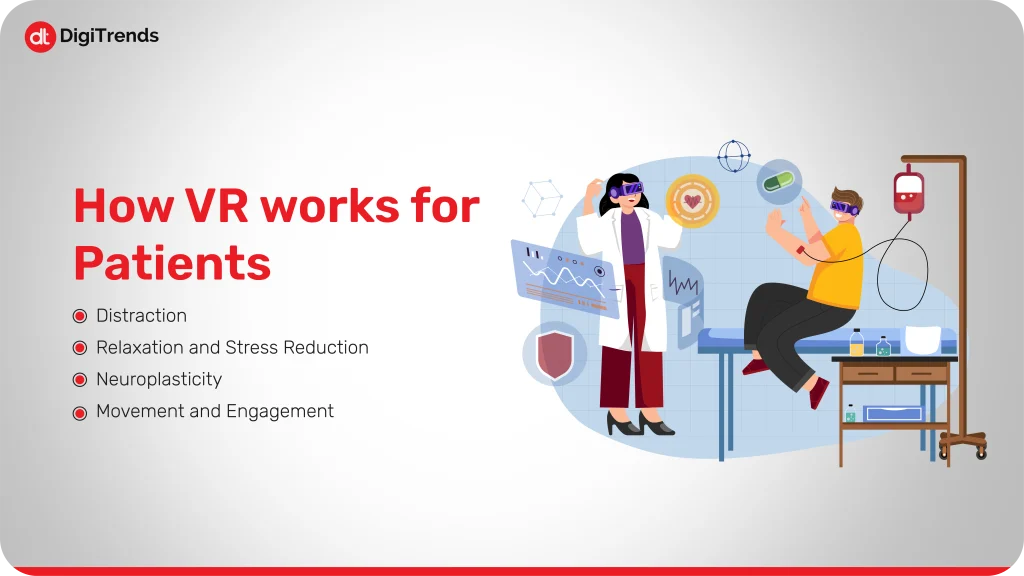
Here’s how it works for patients:
1. Distraction: VR can divert the patient’s attention away from the source of pain. When the patient is put in a calm environment, or the brain is focused on exploring, then the pain signals become less dominant.
2. Relaxation and Stress Reduction: Calming VR experiences (like beaches, forests, or breathing exercises) activate the body’s relaxation response, lowering heart rate and muscle tension.
3. Neuroplasticity: In cases like chronic or phantom limb pain, VR helps “rewire” the pain response by retraining how the brain interprets pain signals.
4. Movement and Engagement: VR can also be used in rehabilitation; it can motivate patients to move, stretch, or perform guided exercises in a setting that they like, for example, a game setting. This will reduce their perceived pain through participation.
Most importantly, VR for pain relief is non-invasive. No pills. No injections. Just an immersive headset and well-designed software.
10 Ways VR for Pain Relief is Transforming HealthCare
The real impact of VR goes far beyond what people expect.
VR technology in healthcare is not just about a distraction tool or fancy headset; it is truly reshaping how doctors, therapists, and even patients understand and manage pain.
Let’s have a look at 10 ways VR for pain relief is making healthcare a lot better:
1. Distraction During Painful Procedures
The most effective use of VR in medicine is as a distraction tool for painful or stressful procedures.
VR for distraction is implemented at the University of Washington’s Harborview Burn Center, where doctors use a VR game called SnowWorld to help patients during wound cleaning. Instead of focusing on pain, patients throw snowballs in a virtual canyon, which helps them get distracted from the pain of wound cleaning, and both doctors and patients can easily go through that procedure.
For hospitals and clinics, introducing a VR headset for pain relief during procedures like dressing changes, injections, or dental treatments can instantly improve patient experience.
2. Managing Chronic Pain
Even after injuries heal, chronic pain can linger on, which often becomes a neurological loop. VR can help in these cases by teaching the brain to “turn down” those signals.
In a study by the University of Tennessee, Knoxville, a virtual reality application called Cool was used. In this experiment, patients used a VR headset to virtually travel along a preset route through a computer-generated fantasy world to minimize the pain, and this resulted in a 60% drop in pain during sessions and about 33% less pain afterward.
Doctors and hospitals can create immersive environments that promote movement and mindfulness to help patients deal with chronic pain. VR helps patients build a healthier relationship with their bodies; something medication alone can’t do.
For healthcare providers, offering VR-assisted recovery rooms could mean shorter stays, happier patients, and reduced medication costs.
4. Reducing Anxiety Alongside Pain
Although pain and anxiety are two entirely different factors but they feed off each other. There is no doubt in the fact that when you’re anxious, pain feels worse and vice versa. VR can help tackle both.
Hospitals now also use VR before surgeries, during dental procedures, and even in MRI scans to reduce anxiety. The immersive nature scenes, breathing exercises, or guided meditations in the VR help lower heart rates and tension.
Amputees go through a pain called phantom limb, in which they feel sensations in their missing limb. It’s caused by the brain misfiring pain signals even though the limb is gone. VR basically helps “trick” the brain into seeing and controlling the missing limb again, rewiring how it interprets those signals.
This is one of the most fascinating uses of VR for pain relief that helps patients retrain their nervous systems, not just mask discomfort.
6. Musculoskeletal and Joint Pain
One of the leading causes of disability is muscle pain from injuries or conditions like arthritis. VR is changing how these patients approach recovery.
Instead of counting reps in a therapy room, patients can use VR to complete engaging challenges like catching virtual objects or exploring simulated environments. This activity boosts motivation and consistency while reducing the pain that is perceived.
Rehab centers worldwide are integrating VR headsets for pain relief programs to help patients stay active, engaged, and optimistic throughout recovery.
7. Pediatric Pain Management
The way children process pain and fear is entirely different from how adults process it. Hospitals can use VR for kids to achieve calmer experiences, fewer tears, and lower pain scores.
For healthcare providers, introducing VR technology in healthcare can be a real game-changer for children, because it not only improves comfort but also builds trust and positive memories around medical care.
8. Rehabilitation and Functional Recovery
VR in pain relief is not only about distraction from pain. It is also about motivating people to move and rebuild physical function after surgery, stroke, or injury.
Hospitals in the U.S., UAE, and the UK use VR rehabilitation programs for orthopedic and neurological patients. These programs combine physical therapy with gamified VR experiences to keep patients engaged.
One major benefit of VR for rehabilitation is that VR encourages repetition without boredom. For example, stroke patients using VR for recovery show faster improvements in hand-eye coordination and mobility, with significantly less pain during exercise.
9. Immersive Environments and Better Pain Outcomes
The quality of immersion matters. Studies show that the more realistic and interactive a VR experience is, the more effective it becomes for pain relief.
Fully immersive setups using head-mounted displays (HMDs) have been shown to reduce pain more than 2D or screen-based experiences. Interactive elements like movement, voice control, or tactile feedback enhance results even further.
For VR service providers, this means investing in high-quality visuals, spatial audio, and ergonomic headsets. When patients feel truly “inside” the experience, pain relief happens faster and lasts longer.
10. A Non-Opioid Alternative
One of the biggest global healthcare challenges is overreliance on opioids for pain management. VR offers a powerful, drug-free alternative.
The implications are huge. Nowadays, hospitals look for options that are safer and more holistic. VR technology in healthcare offers a way to manage pain with zero chemical side effects.
It’s cost-effective, scalable, and most importantly, patient-approved.
Real-Life Success Stories of VR for Pain Relief
Let’s look at how real hospitals are using VR around the world:
Hoag Hospital (California): Uses VR for post-op recovery; patients report reduced pain and stress within minutes.
Cedars-Sinai Medical Center (Los Angeles): Integrated VR into inpatient rooms.
Royal Children’s Hospital (Australia): Uses VR for pediatric procedures, cutting fear and pain levels nearly in half.
Stanford Children’s Health (California): Combines VR with physical rehab to help kids with chronic pain regain movement confidence.
These examples prove that VR for pain relief is not a theory or fantasy; it’s already changing lives in real healthcare settings.
The Future of VR Technology in Healthcare
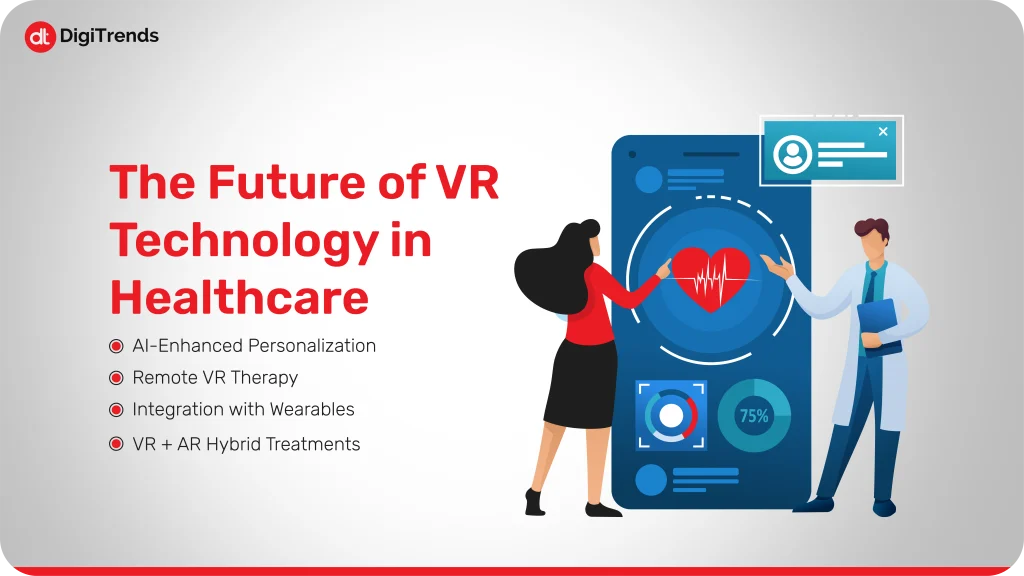
The potential for VR in healthcare goes far beyond what we’ve seen so far. Here’s where it’s headed next:
1. AI-Enhanced Personalization: Future VR systems will use AI to adjust experiences based on heart rate, facial expressions, or body movements, personalizing pain management in real time.
2. Remote VR Therapy: As VR headsets become more affordable, at-home therapy sessions for chronic pain or post-surgery recovery will become standard.
3. Integration with Wearables: Devices like smartwatches and biofeedback sensors will sync with VR to monitor pain responses, anxiety, and progress automatically.
4. VR + AR Hybrid Treatments: Combining virtual and augmented reality could let patients interact with real therapists or environments while still experiencing immersive relief.
The next decade could see VR headsets become as common in hospitals as blood pressure monitors.
How DigiTrends Can Help
The real power of VR for pain relief lies not just in the technology, but in how it’s designed, built, and implemented. That’s where DigiTrends comes in.
We help healthcare providers, hospitals, and wellness startups turn immersive technology into meaningful results. As a VR development company, our team specializes in building custom VR solutions for healthcare, designed to enhance patient comfort and improve recovery outcomes.
Whether it’s:
Developing interactive VR applications for pain distraction and therapy
Designing custom VR environments for relaxation, rehabilitation, or anxiety reduction
Integrating VR headset solutions into existing hospital systems
We make sure every experience feels real, reliable, and rooted in science.
At DigiTrends, we believe healthcare innovation should be human-centered. Our goal is simple: help you deliver relief that feels personal, natural, and effective.
If you’re ready to explore how virtual reality therapy for pain management can transform your practice or business, our team can guide you from concept to launch.
Conclusion
Pain is universal, and how we treat it is changing fast. VR for pain relief has proven that immersive technology can calm the mind, retrain the brain, and help the body heal naturally.
From operating rooms to living rooms, VR is becoming one of healthcare’s most powerful tools, safe, effective, and surprisingly human.
If you’re exploring VR technology in healthcare, now’s the time to take it seriously. Patients are asking for it. Research supports it. And it’s redefining how we experience comfort and recovery.
Submit Your Message
Author :Muhammad Ishaque
I’m a dedicated SEO specialist who propels brands to new heights of online visibility and growth through digital strategies and analytical insights.
Recent Blogs
February 17th, 2026
Customer Experience Automation in 2026: How AI is Transforming CX Strategy
Explore how customer experience automation is used to fulfill modern customer demands, how AI helps in transforming CX strategy, key CX automation tools, real-world examples, and more.











 07 October 2025
  6 months ago
  173 Views