Hyper-Personalization with First-Party Data: A Smarter Way to Engage Customers
Published
18 December 2025
Time
10 months ago
Views
1097 Views
Muhammad Ishaque
As the SEO Manager at DigiTrends, Muhammad leads organic growth initiatives by developing and executing data-driven SEO strategies that improve search visibility, drive qualified traffic, and support business growth. With extensive experience in technical SEO, on-page optimization, content strategy, keyword research, and performance analysis, he focuses on delivering sustainable search results that align with business objectives. His ability to identify search opportunities, analyze market trends, and implement scalable SEO solutions helps businesses strengthen their digital presence and achieve long-term success.
Table Of content
Share This Article
Since the fall of third-party cookies by Google, the digital marketing world has experienced a dramatic shift.
For digital advertisers, third-party cookies were useful to track user behavior, create ads that resonated with the targeted audience, and measure campaign performance.
Now, most digital marketing teams struggle to create personalized ad campaigns due to limited tracking; they can’t perform A/B testing for campaign optimization, and they struggle to track return on ad spend (ROAS).
But the world goes on with or without third-party cookies, and it is time for marketers to come out of this loss and think about their next steps. The best step they take right now is to think about hyper-personalization with first-party data.
They should now start using data that customers share willingly, including their preferences, behaviors, and interactions. Using all this data, brands can easily create experiences that are highly personalized and meaningful for the customers.
The truth about data marketing is that companies that use first-party data marketing to create hyper-personalized strategies without using third-party cookies can build stronger connections, increase their engagement, and grow their business. This is because the world is now more focused on privacy; hence, the best way to provide personalized experiences is through data that customers willingly share.
This blog will help you dig deeper into the concept of hyper-personalization with first-party data and also help you understand the mistakes that brands are making nowadays.
What is Hyper-Personalization
Hyper-personalization is a type of business strategy that uses technology and smart tools like AI and predictive analysis to provide customers with a highly personalized experience by analyzing data and patterns on a deeper level than traditional personalization.
Let’s have a look at the difference between traditional personalization and hyper-personalization so you can have a better understanding of how and where you can utilize both.
Aspect
Traditional Personalization
Hyper-Personalization
Data Used
Basic info like name, location, or broad segments
First-party data, including behavior, preferences, interactions, and intent
Messaging
Generic messages for large groups
Real-time, tailored messages for individual users
Timing
Static or scheduled campaigns
Dynamic, triggered by actions or context
Experience
One-size-fits-most content
Unique, relevant experiences across channels
Goal
Increase engagement
Build meaningful connections and drive conversions
This table shows how hyper-personalization in marketing, with the help of first-party data, can be a business’s best bet in this modern world.
Why First-Party Data is Critical
In the modern world, customers are always concerned about their privacy; hence, hyper-personalization with first-party data has become an essential part of marketing personalization. Many marketers are now shifting towards data-driven personalization strategies after the fall of third-party cookies. It is important for brands to now realize that creating personalization in marketing through data that customers themselves share is the best move they can make right now, as it can prove to be both effective and privacy-safe.
Have a look at the types of first-party data; each provides unique insights for personalization in marketing:
Data Type
What It Includes
How It Supports Hyper-Personalization
Behavioral Data
Pages visited, clicks, time spent, search queries
Enables dynamic content recommendations and personalized advertising based on individual behavior
Transactional Data
Purchases, subscriptions, renewals, cart activity
Helps tailor offers, discounts, and cross-sell or upsell opportunities
Engagement Data
Email opens, app usage, social interactions
Drives timely, relevant messages and customized marketing solutions for highly engaged customers
Zero-Party Data
Preferences, surveys, direct feedback, and account settings
Provides explicit insights into power personalization trends that truly reflect customer intent
These data are extremely useful for brands if they wish to craft hyper-personalized customer experiences for multiple digital marketing channels.
As an example, we can consider a retail brand. It can use this first-party data to recommend products to customers based on their browsing patterns on shopping websites (behavioral data) and send out personalized discount offers to customers who buy items at full price (transactional data). Moreover, short quizzes about customers’ favorite styles, size, and color can be conducted to analyze customer preferences and create a new product according to that (zero-party data), which will make sure the brand’s messaging is resonating with what the customer really wants.
What truly sets first-party data apart?
First-party data has the power to support personalization in marketing without any reliance on intrusive tracking like third-party cookies. First-party data marketing highly respects user privacy while also allowing marketers to increase engagement by creating customized marketing solutions.
As a company, you can collect, analyze, and utilize first-party data to gain a competitive advantage in the market by staying ahead of personalization trends and providing exceptional experiences to your customers.
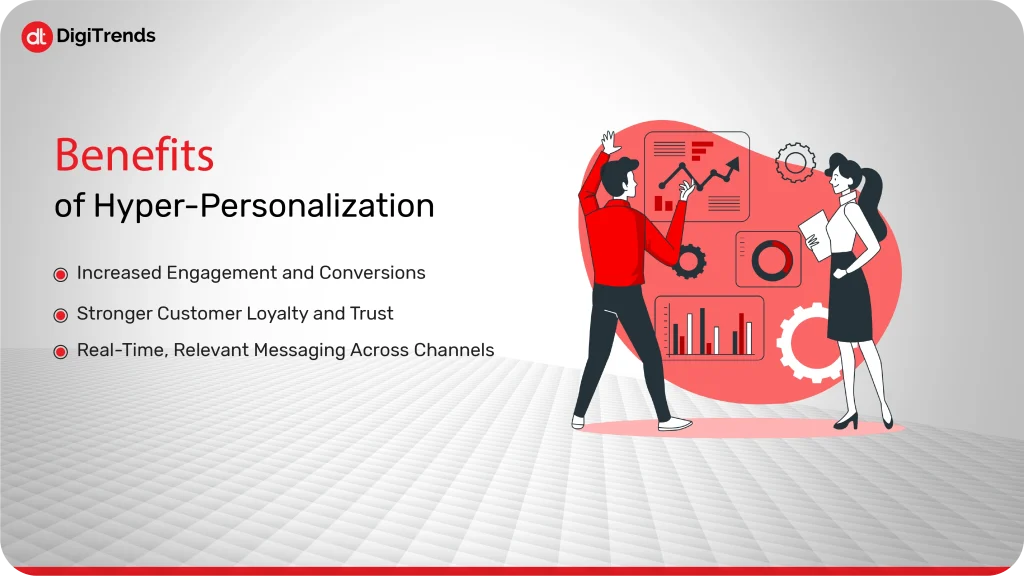
Benefits of Hyper-Personalization
Implementing hyper-personalization with first-party data comes with various advantages for businesses that are looking to gain a competitive advantage in the market. Businesses can use the data that customers share willingly and deliver personalized experiences without risking their privacy. Let’s have a look at the benefits of hyper-personalization to a business.
1. Increased Engagement and Conversions
Hyper-personalization will allow your brand to send a message that resonates well with the customers, and that too at the right time. The way the hyper-personalization strategy analyzes different kinds of data, such as behavioral, transactional, and engagement data, marketers can easily create customized marketing solutions according to the particular preferences of each customer.
2. Stronger Customer Loyalty and Trust
One thing that can instantly boost customer loyalty is the feeling of being understood and respected by the brand.
When brands use first-party data, customers are assured that their privacy is respected, which builds trust in their minds, contributing to a long-term relationship between the brand and the customers. As a brand, if you ensure your customers that their privacy is being protected and are still able to provide experiences that resonate with them, there is are high chance that your customer retention rate increases. This is the value of personalization in marketing.
3. Real-Time, Relevant Messaging Across Channels
Hyper-personalization enables marketers to respond dynamically to customer actions. Whether it’s a personalized product recommendation on a website, a tailored email based on recent activity, or a mobile app notification triggered by engagement, companies can maintain consistent, hyper-personalized customer experiences across channels. This approach aligns with the latest personalization trends and ensures that messaging is always timely and contextually relevant.
By prioritizing first-party data, brands can implement customized marketing solutions that respect privacy, improve engagement, and maximize ROI. Hyper-personalization is not just a trend; it is a strategic approach that empowers marketers to create meaningful connections, drive conversions, and future-proof their campaigns in a world where privacy and relevance go hand-in-hand.
Common Mistakes That Brands Make
While many brands understand the importance of hyper-personalization, execution is where things often go wrong. Using hyper-personalization with first-party data effectively requires strategy, consistency, and the right foundation. Below are some of the most common mistakes brands make when trying to implement personalization in marketing.
Collecting Data Without a Clear Strategy
Many companies collect large volumes of first-party data but fail to define how it will be used. Without clear goals, data becomes noise rather than insight. Successful first-party data marketing starts with understanding what data matters, where it fits in the customer journey, and how it supports specific business objectives.
Over-Personalizing or Under-Personalizing Experiences
Personalization should feel helpful, not intrusive. Over-personalizing can overwhelm customers and raise privacy concerns, while under-personalizing leads to generic messaging that fails to engage. Striking the right balance is key to delivering hyper-personalized customer experiences that feel relevant and respectful.
Ignoring Data Quality and Accuracy
Poor data quality can undermine even the best personalization efforts. Outdated, incomplete, or inconsistent data leads to irrelevant messaging and missed opportunities. Brands must regularly review, clean, and validate their data to ensure their customized marketing solutions are built on accurate insights.
Treating Personalization as a One-Time Campaign
Personalization is not a set-it-and-forget-it tactic. Customer preferences, behaviors, and expectations change constantly. Brands that treat marketing personalization as a one-time effort risk falling behind. Continuous optimization, testing, and refinement are essential to staying aligned with evolving personalization trends.
Underestimating Technology and Process Challenges
Even with strong data, fragmented tools and disconnected systems can slow personalization efforts. Without the right technology setup and aligned processes, delivering consistent experiences across channels becomes difficult. Simplifying workflows and ensuring systems work together helps brands scale personalization more effectively.
Avoiding these mistakes allows brands to move beyond surface-level personalization and unlock the true value of personalization without third-party cookies. When executed correctly, hyper-personalization becomes a long-term strategy that drives trust, engagement, and sustainable growth.
How to Implement Hyper-Personalization with First-Party Data
Implementing hyper-personalization with first-party data doesn’t require a complete overhaul of your marketing strategy. What it does require is a structured, intentional approach that aligns data, messaging, and customer experience.
1. Audit and Organize Your First-Party Data
Start by identifying what data you already have. This includes website behavior, purchase history, email engagement, app usage, and customer preferences. The goal is not to collect more data, but to understand which data points are most valuable for first-party data marketing and marketing personalization.
2. Segment Customers Based on Real Behavior
Move beyond basic demographics. Segment audiences based on actions, intent, lifecycle stage, and engagement patterns. These segments allow brands to create hyper-personalized customer experiences that feel relevant rather than generic.
3. Map Personalization to Key Touchpoints
Identify where personalization will have the highest impact. This could be website content, email campaigns, ads, or in-app messaging. Align each touchpoint with the right data signals to support personalized advertising and consistent messaging across channels.
4. Deliver Relevant, Timely Messaging
Use first-party data to trigger messages based on real-time actions. Whether it’s a product recommendation, a follow-up email, or a special offer, timing and relevance are critical. This approach supports personalization without third-party cookies while maintaining customer trust.
5. Measure, Learn, and Optimize Continuously
Hyper-personalization is an ongoing process. Track engagement, conversions, retention, and customer feedback to understand what’s working. Regular optimization ensures your customized marketing solutions evolve with changing customer expectations and emerging personalization trends.
By following these steps, brands can turn first-party data into a powerful personalization engine. The result is smarter marketing, stronger relationships, and experiences that feel genuinely tailored to each customer.
Tools and Technology
To make hyper-personalization with first-party data work, brands need the right tools to collect, organize, and activate customer insights. The focus isn’t on complex automation; it’s on using data effectively.
Customer Data Platforms (CDPs) help unify first-party data from websites, apps, emails, and other touchpoints into a single customer view. This makes it easier to understand behavior and deliver consistent experiences.
CRM systems store customer history, interactions, and preferences. They play a key role in first-party data marketing by supporting personalized communication and long-term relationship building.
Personalization engines use customer signals to tailor content, offers, and messaging across channels. When powered by accurate first-party data, they enable personalization in marketing that feels relevant and timely.
Together, these tools help brands deliver customized marketing solutions and support personalization without third-party cookies, keeping experiences privacy-safe and customer-focused.
DigiTrends Digital Marketing Services
DigiTrends is a digital solutions company that helps brands strengthen their online presence and connect with the right audience through well-planned digital strategies. Our digital marketing services are designed to support businesses at every stage of growth, from building visibility to driving meaningful engagement.
We offer a wide range of services, including search engine optimization, paid media, social media marketing, content strategy, and performance-driven campaigns. Each service is aligned with business goals and backed by data to ensure measurable outcomes.
In addition to digital marketing, DigiTrends also works in the area of AI solutions, helping businesses explore smarter ways to improve efficiency, insights, and customer experiences. AI can be a powerful tool that complements existing marketing efforts, supports data-driven decision-making, and prepares brands for the evolving digital landscape.
By combining marketing expertise with emerging technologies, DigiTrends enables businesses to stay competitive, adaptable, and ready for what’s next.
Conclusion
Hyper-personalization is no longer about doing more; it’s about doing it right. As third-party cookies fade and privacy expectations grow, hyper-personalization with first-party data has become the most reliable way for brands to deliver relevant, meaningful customer experiences.
By using data customers willingly share, businesses can build trust, increase engagement, and create personalization in marketing that feels natural rather than intrusive. When supported by the right strategy, tools, and continuous optimization, first-party data marketing enables brands to stay ahead of evolving personalization trends while maintaining privacy and compliance.
Frequently Asked Questions
Hyper-personalization in digital marketing is an advanced approach to personalization that uses first-party data such as user behavior, preferences, and interactions to deliver highly relevant content, offers, and messaging in real time. Unlike traditional personalization, it focuses on individual customer intent rather than broad audience segments.
First-party data is important because it is collected directly from customers with their consent, making it accurate, reliable, and privacy-safe. It enables brands to deliver personalized experiences without relying on third-party cookies, helping businesses build trust while improving engagement and conversions.
Traditional personalization relies on basic details like names or demographics and delivers similar messages to large groups. Hyper-personalization uses real-time first-party data to tailor experiences for individual users, creating more relevant and meaningful interactions across channels.
Yes, brands can achieve effective personalization without third-party cookies by using first-party data such as website behavior, purchase history, email engagement, and customer preferences. This approach supports privacy-first marketing while still enabling targeted and relevant communication.
Hyper-personalization can enhance multiple marketing channels, including websites, email campaigns, paid advertising, mobile apps, and social media. By using first-party data, brands can deliver consistent and personalized messaging across all customer touchpoints.
Submit Your Message
Author :Muhammad Ishaque
As the SEO Manager at DigiTrends, Muhammad leads organic growth initiatives by developing and executing data-driven SEO strategies that improve search visibility, drive qualified traffic, and support business growth. With extensive experience in technical SEO, on-page optimization, content strategy, keyword research, and performance analysis, he focuses on delivering sustainable search results that align with business objectives. His ability to identify search opportunities, analyze market trends, and implement scalable SEO solutions helps businesses strengthen their digital presence and achieve long-term success.
Recent Blogs
May 18th, 2026
How Predictive Analytics Helps Financial Services Stay Ahead of the Competition
Several technologies have been contributing to changes in how financial institutions operate and provide services to their customers. For a long time, AMCs, banks, and insurance companies have been changing their operations, moving towards digitalization and AI-powered solutions to enhance the customer experience and gain a competitive advantage in the finte...
Customer Experience Automation in 2026: How AI is Transforming CX Strategy
Explore how customer experience automation is used to fulfill modern customer demands, how AI helps in transforming CX strategy, key CX automation tools, real-world examples, and more.
Enabling First-Mover Advantage through Structured AI Adoption in KSA.
Driven by regional expertise and practical implementation experience, we help organisations in KSA move confidently from strategy to scalable AI execution with an approach aligned with Saudia’s Vision 2030 and SDAIA mandate.








 18 December 2025
  10 months ago
  1097 Views