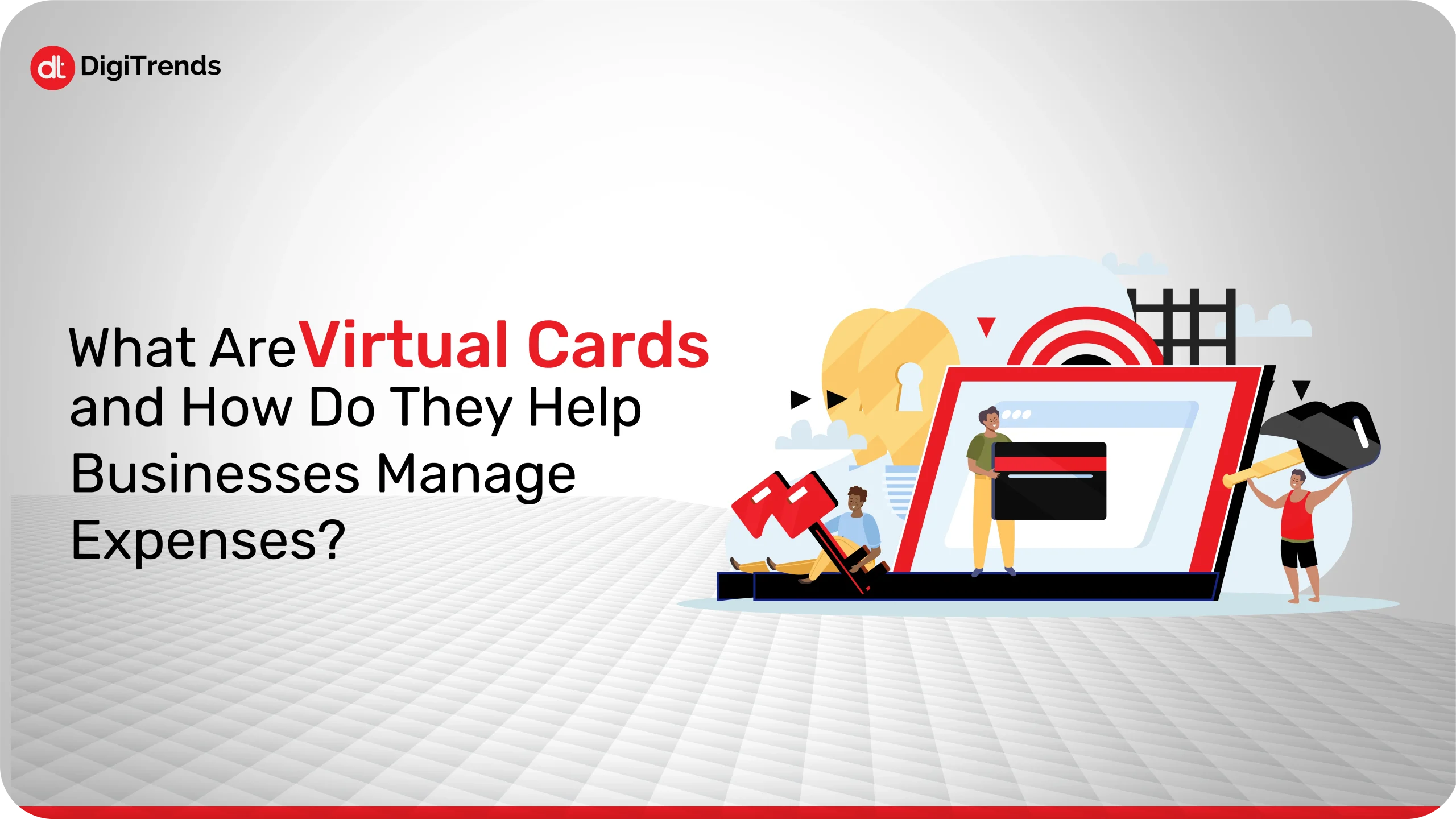
What Are Virtual Cards and How Do They Help Businesses Manage Expenses?
Published
02 January 2026
Time
10 months ago
Views
1151 Views
Muhammad Ishaque
As the SEO Manager at DigiTrends, Muhammad leads organic growth initiatives by developing and executing data-driven SEO strategies that improve search visibility, drive qualified traffic, and support business growth. With extensive experience in technical SEO, on-page optimization, content strategy, keyword research, and performance analysis, he focuses on delivering sustainable search results that align with business objectives. His ability to identify search opportunities, analyze market trends, and implement scalable SEO solutions helps businesses strengthen their digital presence and achieve long-term success.
Table Of content
Share This Article
Businesses face numerous challenges when it comes to managing their finances. It can be one of the biggest headaches for businesses, as every purchase, subscription, or travel cost needs to be tracked, approved, and recorded.
However, managing all this is not easy, and often receipts get lost, expense reports pile up, and employees sometimes end up paying out of pocket.
The challenges surrounding financial management for businesses can be sorted by visual cards.
Virtual cards are becoming one of the most practical expense solutions for businesses as they provide more control over finances and better visibility. According to Fortune Market Insights, the Virtual Cards Market is projected to reach USD 60.7 billion by 2035.
Explore what virtual cards are, how they work, and why they’re quickly replacing traditional methods of managing business expenses.
What are Virtual Cards?
Virtual cards are similar to regular debit and credit cards, except for one main difference: Virtual Cards do not exist physically.
It is a digital card number that can easily be used for online purchases, subscriptions, and even in-store purchases (if it is linked to a mobile wallet).
Expense management in businesses can be simplified by virtual cards. Companies can issue these cards to their employees, departments, or use them for specific purposes like software subscriptions or travel. They can set a spending limit for the cards and different rules for each card that increase financial flexibility for owners.
Think of them as the modern version of the company card, but designed with digital spending and real-time expense tracking in mind.
Why Expense Management is a Struggle for Businesses
The traditional expense management business processes rely heavily on receipts, manual reporting, and after-the-fact approvals.
What usually happens is when an employee pays for a company expense with their personal card, let’s take fuel, for example, an employee goes to a meeting by driving their own car, they get fuel with their own card, and then send the fuel receipt to the company for reimbursement. This reimbursement would take days or weeks to be processed by the finance department, and these procedures sometimes create misunderstandings between the company and employee when there is confusion.
In these cases, going with traditional ways can waste a lot of time, create room for mistakes, and make it harder for the company to keep track of cash flow in real-time.
According to a study, nearly 19% of expense reports contain errors, and fixing each one adds high cost and time, potentially adding $52 or more to the processing cost of a single report. For businesses with limited resources, that’s a major problem.
How Virtual Cards Simplify Expense Management for Businesses
What makes the virtual cards attractive for businesses is that they can shift businesses from after-the-fact reporting, which means the transaction takes place, and then it gets verified, processed, and reimbursed. Virtual cards allow businesses to control spending in advance; the owners can control how much, where, and when a card can be used.
Some ways they simplify expense solutions:
Instant issuance: Owners can generate and issue a card instantly for any employee or vendor.
Custom rules: Set spending limits by day, week, or total amount.
Real-time tracking: Every transaction shows up immediately in the dashboard.
No more lost receipts: Many platforms auto-capture and log expenses.
Tighter security: Cards can be paused or canceled with one click.
Virtual cards can basically act like an expense tracking software for businesses, which will increase efficiency and control.
The Benefits of Virtual Cards for Businesses
Let’s explore the benefits businesses can gain by adopting the virtual cards software.
1. Better Spend Control
Companies usually issue one corporate card to the employees, but businesses can issue separate virtual credit cards with specific limits. For example, the marketing team might have a $500 monthly cap for ads, while a remote worker gets $200 for internet reimbursement.
2. Enhanced Security
Virtual cards are not present physically; hence, there is no chance of them being lost or misused. These cards are often designed for one-time use only, so even if details are compromised, the damage would be minimal.
3. Real-Time Visibility
With the help of these cards, companies can keep real-time expense tracking rather than waiting for a monthly statement to track and manage expenses.
4. Smoother Employee Experience
Virtual business cards for businesses ensure that employees won’t have to pay out of their pocket and wait weeks or months for reimbursements. Employees can easily use these cards to pay for any business transactions or bills, and the data will be automatically logged in the software.
5. Seamless Integration
Many fintech providers let these cards sync directly with expense tracking software and accounting tools like QuickBooks or Xero. That reduces manual data entry and human error.
Virtual Cards vs. Traditional Corporate Cards
Companies can choose between traditional corporate cards and virtual cards; both serve the same purpose, but there are minor differences in how they work. Let’s have a look:
Features
Traditional Corporate Cards
Virtual Cards
Access
Usually held by one or two employees; others must request use or file reimbursements
Instantly generated for any employee, team, or purpose
Scalability
Limited number of cards tied to the business account
Unlimited issuance, each with its own rules and limits
Expense Control
Broad spending power with limited oversight
Custom limits, expiration dates, and real-time spend tracking
Flexibility
Hard to adjust quickly; one-size-fits-all
Highly customizable by project, vendor, or subscription
Security
Risk of loss, theft, or misuse of physical cards
Digital, cancellable with one click, often single-use options
While traditional corporate cards are of good use too, they can create bottlenecks that virtual cards can easily control according to modern business needs.
The Role of Fintech in Expense Management
The rise of fintech expense solutions has made it possible for businesses to access tools once reserved for large enterprises. Banking-as-a-Service (BaaS) and digital-first platforms allow companies to issue virtual payables, automate approvals, and integrate with their financial systems.
Fintech providers aren’t just offering convenience, they’re reshaping the way businesses handle money. From receipt digitization to approval workflows for expenses, everything can now run faster and smarter.
Common Use Cases for Virtual Cards
Companies are finding creative ways to use virtual credit cards:
Subscriptions and SaaS tools: Assign a unique card to each subscription for easier tracking.
Vendor payments: Use cards instead of checks or wire transfers for quicker transactions.
Employee perks: Give staff cards for meals, transport, or work-from-home allowances.
Travel expenses: Create temporary cards with limits for trips.
By tailoring cards to specific needs, businesses gain both control and transparency.
Expense Tracking Software + Virtual Cards = Perfect Match
On their own, virtual cards are powerful. Paired with expense tracking software, they become even more effective. Every transaction flows automatically into reports, giving businesses:
Automated expense policies
Easier approvals
Faster reconciliation
Clearer financial insights
This combination reduces paperwork and gives businesses more time to focus on growth.
Future of Virtual Cards and Fintech Expense Solutions
The demand for virtual cards is set to grow. As more businesses go digital, they’ll need secure virtual cards for expense management that integrate seamlessly with other systems.
Expect to see tighter links between virtual card solutions and accounting software, more advanced fraud detection, and even broader use cases like contractor payments or microloans.
For businesses, this means more options, better affordability, and smarter ways to stay on top of finances.
How DigiTrends Can Help
That’s where DigiTrends steps in. We help businesses design and implement fintech expense solutions that go beyond payments. From integration with existing software to building custom dashboards for real-time expense tracking, our goal is to make digital finance work for you, not the other way around.
Whether you’re looking to modernize spend control, explore new payment solutions, or create a secure and scalable framework for managing business expenses, DigiTrends can guide the process from strategy to execution.
Conclusion
Many businesses struggle with expense management, juggling receipts, reimbursements, and delayed reporting.
Virtual cards change that story.
They bring instant issuance, real-time oversight, and secure transactions, making them one of the smartest expense solutions available today.
Whether it’s cutting down on paperwork, preventing fraud, or simply making life easier for employees, the benefits are clear. Businesses that adopt virtual cards are positioning themselves for smoother operations, stronger cash flow control, and a future where financial management doesn’t have to be a constant headache.
Frequently Asked Questions
A virtual card is a digital version of a debit or credit card. It comes with a unique card number, CVV, and expiration date that can be used for online or mobile payments, without needing a physical card.
Traditional cards are physical and usually shared among a few employees. Virtual cards are digital, instantly generated, and can be customized with spending limits, expiration dates, and usage rules for each employee or department.
Yes. Virtual cards are often safer than physical cards. They can be locked or canceled instantly, and some are designed for one-time use, minimizing the risk of fraud or misuse.
Most fintech providers allow virtual cards to sync with expense tracking software and accounting tools, making reconciliation faster and reducing manual errors.
Any business that deals with multiple employees, vendors, or subscriptions can benefit. They offer greater control, visibility, and flexibility compared to traditional expense methods.
Submit Your Message
Author :Muhammad Ishaque
As the SEO Manager at DigiTrends, Muhammad leads organic growth initiatives by developing and executing data-driven SEO strategies that improve search visibility, drive qualified traffic, and support business growth. With extensive experience in technical SEO, on-page optimization, content strategy, keyword research, and performance analysis, he focuses on delivering sustainable search results that align with business objectives. His ability to identify search opportunities, analyze market trends, and implement scalable SEO solutions helps businesses strengthen their digital presence and achieve long-term success.
Recent Blogs
May 18th, 2026
How Predictive Analytics Helps Financial Services Stay Ahead of the Competition
Several technologies have been contributing to changes in how financial institutions operate and provide services to their customers. For a long time, AMCs, banks, and insurance companies have been changing their operations, moving towards digitalization and AI-powered solutions to enhance the customer experience and gain a competitive advantage in the finte...
Generative AI in Banking: Top Use Cases and Real-World Challenges
Explore the real use of generative AI in banking, where banks are already seeing impact, and the challenges they need to navigate to make this shift sustainable.
Enabling First-Mover Advantage through Structured AI Adoption in KSA.
Driven by regional expertise and practical implementation experience, we help organisations in KSA move confidently from strategy to scalable AI execution with an approach aligned with Saudia’s Vision 2030 and SDAIA mandate.












 02 January 2026
  10 months ago
  1151 Views