


Top 11 Healthcare App Developers in the USA: A 2026 Guide
Have a look at the top 11 healthcare app developers in the USA in 2026 and what makes them stand out.
Continue Reading
We build AI-powered software solutions designed to transform your vision into powerful, results-driven applications.

Providing Avant-Garde Mobile App Solutions.
Powerful apps made for the Apple ecosystem
Scalable apps built for android
Single codebase apps that work across platforms
Efficient apps built using React Native
High-performance apps made using Flutter
Providing Bespoke Mobile Game Development Services.
Delivering Innovative And Avant- Garde AR Solutions.
Our VR Development Services Allow Interaction With Simulated Surroundings.
Customised mobile apps for your Shopify shopfront.
Web Development Services With A Stellar Record Of Excellence.
Providing Web Design Services For All Industries.
Offering Custom And Robust PWA Solutions.
Bespoke E-Commerce Solutions For All Industries.
An Exceptional Success Record In CMS Development Services.
Customised software solutions to match corporate requirements.
Providing Business With Bespoke MVP Development Solutions.
DigiTrends Produces Essential Custom Software Solutions.
Transforming Brands With Innovative Digital Marketing.
AI-Powered Solutions. Wide-Ranging Industries. From finance to healthcare, our intelligent technologies drive innovation across every sector.


Revolutionizing Financial Services with Innovative Technology Solutions
Developing digital software to upgrade healthcare
Innovating learning experience with technology
Helping you step up your advertisement game
Reshaping automotive business experiences with tech
Transforming Real Estate with digital solutions
Digitalizing hospitality management with e-solution
Transforming the retail industry for with digital transformation
Transforming data into intelligent insights that drive innovation across multiple industries.


Delivering exceptional services across different cities, innovating here; and thriving everywhere!

Seek exceptional mobile app development in Delaware.
Where creativity and tech unite for innovation.
Seek advanced mobile app development in LA.
Unleash your business with our innovative mobile apps
Step into Austin’s mobile innovation hub.
Each business is unique; tailored approaches for all.
Leaders of mobile app development in Saudi Arabia
Meet the best app developers in Dubai
Meet the Nordik mobile development experts

 15 December 2025
 3 months ago
 86 Views


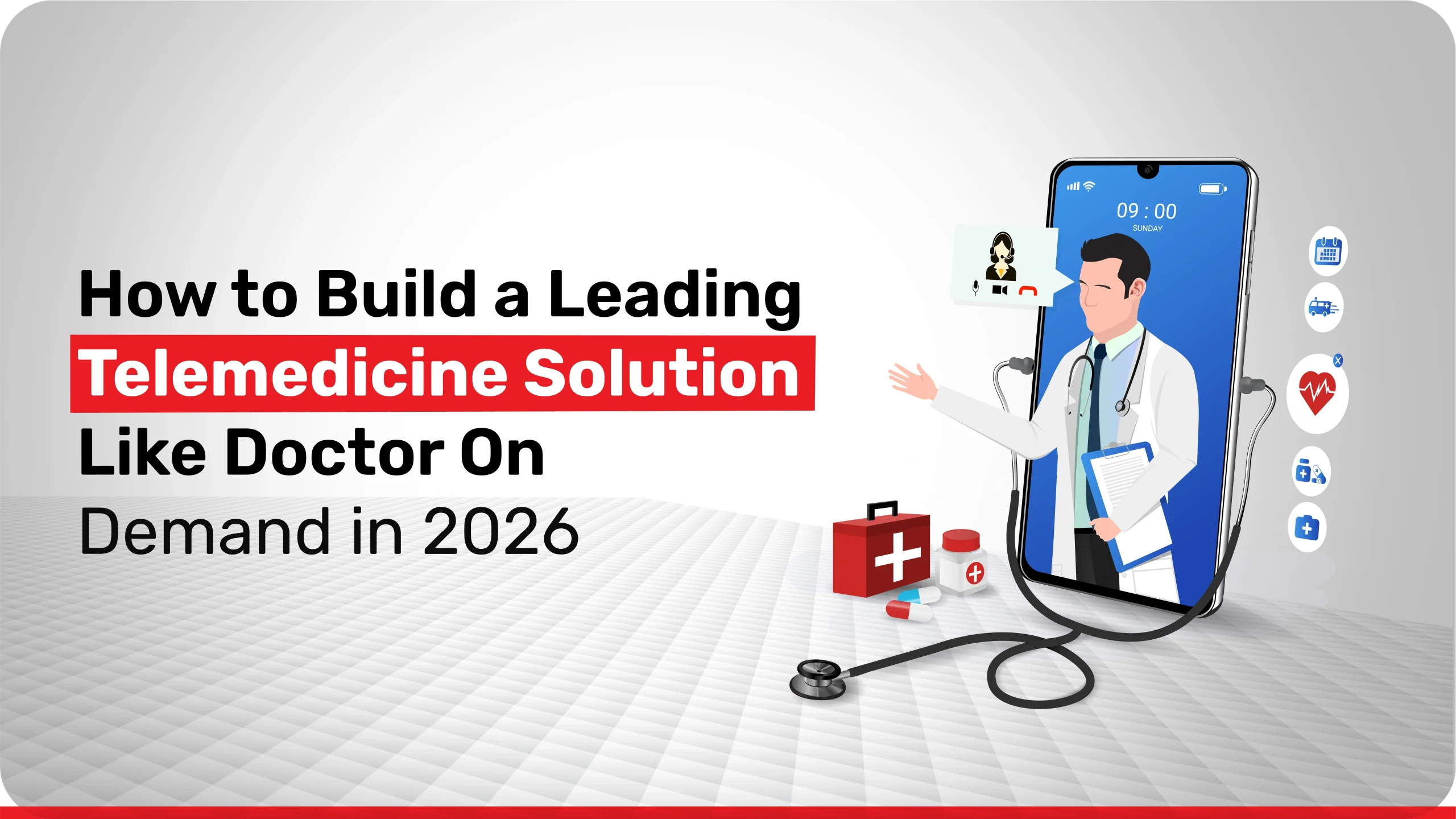
As we enter 2026, convenience in healthcare is a foundation that we are taking with us from 2025.
Now, when people think about booking an appointment, they don’t consider getting stuck in traffic, waiting in long lines, or standing in front of front desks giving out lengthy information; they only think about opening an app and getting the job done without any hassle.
This digital shift did not happen overnight; apps like Doctor On Demand showed up as helping tools for people who expect healthcare that can fit into their daily busy lives. Apps like these proved that healthcare can just be a phone screen away, that patients’ time is respected, and care can be delivered digitally with all the credibility.
Let’s have a look at the features of the Doctor on Demand app and discuss what it takes to build a similar app in 2026.
Telemedicine is an online healthcare platform where patients can, in just a few clicks, book appointments with doctors, get online consultations, get prescriptions, and sometimes also get mental health or chronic disease support. You can think of it as a digital connection between healthcare services and patients; while doctors are able to decide when the patient needs to receive an in-person consultation.
But in 2026, having great functionality in the app is not going to be enough; the design of the app is just as important. You might think that the best telemedicine apps work well because of the latest functions, but what makes these apps successful is the intuitiveness they offer to the users. People now expect healthcare apps to be as sleek and user-friendly as their favorite lifestyle or social platforms. If your app has a clean interface, smooth navigation, and personalized experiences, it can help you significantly boost user trust, engagement, and satisfaction.
The telemedicine app market is very competitive, and there are many players, but only the ones that focus on building an app according to the customer expectations are going to be the top players in the market.
Doctor On Demand is one of the leading telemedicine apps that provides access to medical services and high-quality care from licensed professionals through mobile phones. The app allows users to book virtual appointments with physicians, psychiatrists, and therapists, making it easy to address a wide range of health concerns from the comfort of home. After consultations, prescriptions can be sent directly to the user’s preferred pharmacy, ensuring a seamless experience. You can get help at any time, with only a little wait, if you have urgent matters, ongoing health problems, need preventive care, or want to see about your mental health. To further help people from all financial backgrounds, Doctor On Demand allows you to pay either with insurance or with set fees for each visit.
Since more people want easy access to healthcare, creating the Doctor On Demand app is important because it helps deliver healthcare where and when people require it. This app is different because it puts patients first, has a user-friendly layout, and runs smoothly, proving that the innovation behind doctor-on-demand app development has played a great part in transforming healthcare.
There is a rising demand for convenience in this era, and the healthcare industry is also rapidly advancing with the help of the latest technology. These are the factors that contribute to the fast growth of the telemedicine industry. Patients now demand faster and more flexible access to healthcare so they can easily fit it into their routines without going out of their day for just one short appointment with the doctor.
According to Fortune Business Insights, the global telemedicine market size is projected to reach USD 334.80 billion by 2032. The expansion in the market size shows how customer behavior and expectations have changed; they are now turning towards mobile and digital solutions for on-demand healthcare.
In 2026, choosing to build a telemedicine solution is smart business and a quick answer to how people are using healthcare today. With technology shaping the way people live each day, patients are hoping medical services can be reached easily, quickly, and from any location. Telemedicine provides this service and much more.
Here are the key reasons to invest in building a remote healthcare app:
A telemedicine app overcomes issues created by distance, difficulty moving, and restricted hours for doctors. People who face geographical or time barriers can now receive medical advice from their place of work or home. This creates a real impact for seniors, patients with ongoing health problems, and underserved communities, who often put off seeing a doctor.
The use of virtual care apps lowers expenses for patients as well as for healthcare providers. Working out of clinics means lower rent and personnel costs, and patients stay close to home, so they don’t lose work time or have to travel. Because medical services are more affordable, patients are inclined to get help sooner and more frequently.
Apps that remind patients, send messages, let them arrange visits, and see their documents help them get involved. If a treatment plan fits well into your life, you will often find it easier to follow. If patients find their healthcare appointments fast and simple, they are more likely to go back.
Unlike regular healthcare, virtual care apps are accessible at any time, day or night. If you feel anxious at night or get a fever during the weekend, a doctor is never far away. The flexibility allows clinics to respond quickly in an emergency and to take better care of patients with chronic illnesses.
Across the world, more people need digital healthcare. Telemedicine can offer profitable expansion for healthcare businesses and help them move forward with new trends. No matter if they use Artificial Intelligence for diagnostics or move into new fields, having a solid app enables healthcare businesses to develop and remain on top in the industry.
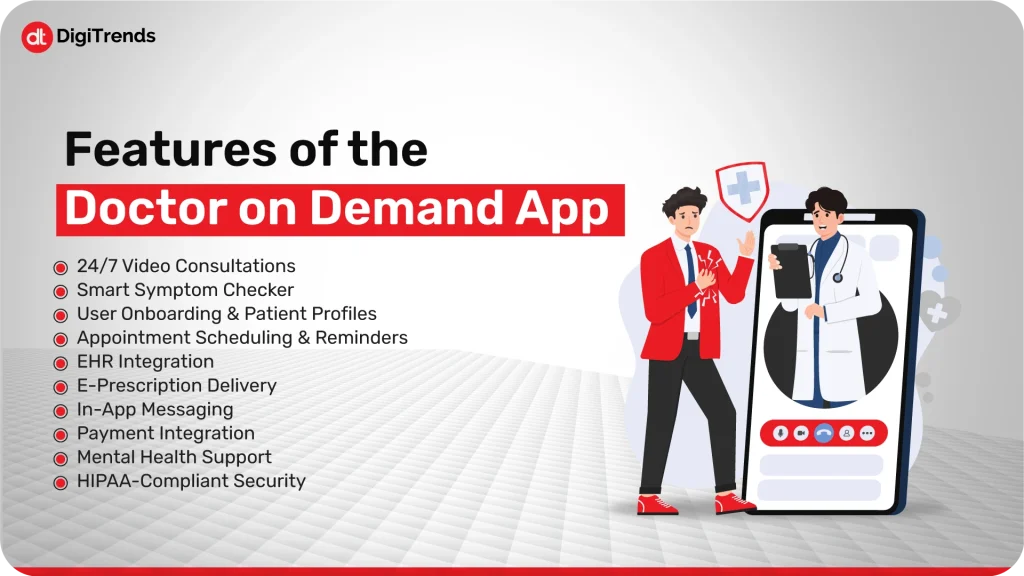
Improving a telehealth platform means including features that allow users to access it easily, increase care efficiency, and give them the best support. There are plenty of useful features on the Doctor on Demand app, showing that it can answer current demands for health services. They help to improve the service’s user experience and also support better growth. Let’s take a look at some main features of the Doctor on Demand app; every one of them needs to be considered when building a similar app.
These features collectively form the backbone of a reliable, user-friendly, and scalable telemedicine solution. Incorporating them effectively in telehealth platform development ensures the platform can deliver high-quality care while meeting the expectations of modern users.
You should begin by looking into the current state of the telehealth market. Look at current platforms, find what is missing in their service offerings, and learn what users expect. Understanding the market helps you decide which aspects of your healthcare app to develop, such as providing additional functions for previously neglected medical groups or making the app easier to use.
What main features should your app be able to provide? Typically, these apps have video consultations, enable people to book appointments, communicate within the app, handle prescriptions, and support online payment. Integrating with EHR systems is required to offer a stable form of patient care. Your chosen features must match both major industry trends and your main area of focus.
Following healthcare rules is necessary. It is a requirement under HIPAA for U.S. applications to protect patient privacy. Your data storage should be extra secure, communication with the back-end should be encrypted, and user logins should be verified before accessing the app. Having an experienced healthcare app development team like DigiTrends makes it likely that your platform is compliant with regulations.
An interface that is easy to use helps keep patients happy and the hospital working efficiently. The design must ensure that important actions, such as scheduling and connecting to virtual visits, are as straightforward as possible for everyone. When the site design is easy to navigate and neat, users keep coming back.
Your app must remain reliable under growing user demand. Develop a strong backend architecture and use cloud infrastructure to manage large data loads and user traffic. Scalability ensures your app can evolve without performance issues as your user base expands.
Develop a system that ensures all the healthcare professionals on your site meet the requirements. The process needs to check employment histories and requires the uploading of certificates. To win users’ trust and maintain the level of service, a clear and honest network of providers must be set up.
A launch will only succeed if it is well-marketed. Launch digital advertising, use social media, join with influencers, and distribute specific content to advertise your platform. Show both patients and providers what is special about the platform and why they should use it.
Post-launch, user feedback is your most valuable tool. Use reviews, surveys, and usage analytics to identify pain points and opportunities for improvement. Regular updates based on this feedback will keep your app competitive, responsive, and aligned with user expectations.
The cost of developing a digital healthcare app can vary significantly based on several key factors, including the complexity of features, development team rates, compliance requirements, and the overall scale of the project.
Let’s break down the cost of building a telehealth solution:
| Component | Estimated Cost (USD) | Description |
| UI/UX Design | $1,000 – $5,000 | Designing intuitive, user-friendly interfaces for patients and doctors. |
| Front-end & Back-end development | $20,000 – $50,000 | Core development work for mobile apps (iOS/Android) and backend infrastructure. |
| Third-party Integrations | $10,000 – $20,000 | Integration of APIs for video calling, payment gateways, maps, etc. |
| EHR & E-Prescription Integration | $5,000 – $10,000 | Connecting to electronic health records systems and enabling prescription flow. |
| Security & Compliance (HIPAA, etc.) | $8,000 – $15,000 | Ensuring patient data protection and regulatory compliance. |
| Quality Assurance & Testing | $5,000 – $15,000 | Detecting bugs and ensuring smooth app performance across devices. |
| Doctor Onboarding System | $5,000 – $10,000 | Features for verifying doctor credentials and managing profiles. |
| Maintenance | 12% – 15% of the initial development cost | Ongoing updates, server costs, and overall project coordination. |
The total cost of the Doctor on Demand app development is around $70,000 to $200,000. The cost of developing a telemedicine app similar to Doctor on Demand may vary due to different features and designs.
If you’re looking to create a telemedicine solution, DigiTrends offers complete telehealth platform development services, from idea to execution. Whether you’re starting from scratch or improving an existing app, we can help bring your remote healthcare app vision to life.
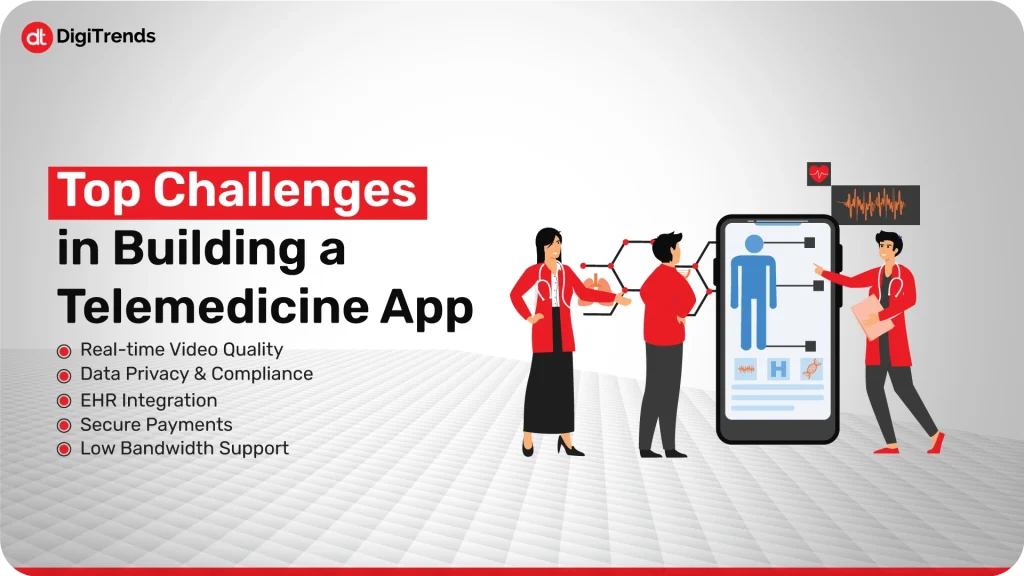
Creating a telemedicine solution like Doctor on Demand involves more than just adding useful features; it also involves tackling hard technical and regulatory issues to provide a good, protected, and convenient user environment. Some of the most important roadblocks encountered during Doctor On Demand app development are listed below:
To support online consultations, any app needs strong and immediate video calls. Ensuring this is successful on all kinds of devices and networks is a major technological difficulty. For consultations to perform well, developers should pick reliable video APIs and adhere to adaptive streaming technologies.
Since telemedicine apps use personal health data, it is necessary to strictly follow HIPAA and other regulations worldwide. It needs to use high-level encryption tools, safe data protection measures, valuable user authentication systems, and trails for investigations. If the healthcare app does not comply, the organization could face legal actions and lose the trust of its users.
The virtual care app needs to link with EHR systems so continuity of care is maintained, but it’s hard because systems often use different data languages and standards. If EHR systems work seamlessly together, it becomes much easier for providers to see accurate patient medical history, which improves both diagnosis and care.
It is challenging to ensure payments are safe and, at the same time, keep users happy. Users should be able to pay using various methods, including credit cards, payments from insurance, and digital wallets, and all data should be safe.
There are many areas where people cannot use high-speed internet, especially in rural or underserved areas. Ensuring the app works smoothly even in low-speed networks, video resolution is lowered, the interface is supposed to be simple, and offline-friendly features should be added.
Successfully overcoming these challenges is important to deliver a trustworthy and effective telemedicine solution. Prioritizing security, performance, and accessibility will ensure that both patients and healthcare providers can rely on your platform for safe, efficient, and high-quality virtual care.
Doctor on Demand is well known in telehealth, yet various other platforms provide similar or special services as well. If people require urgent care, mental health support, or routine primary care, these similar platforms offer solutions to suit everyone. Going through these services can help anyone looking into Doctor On Demand app development discover useful information about available features, business systems, and innovative ideas.
1. Teladoc Health: Teladoc Health has stood out as a leader in telemedicine around the world. Members can get medical care, see a psychologist, get dermatological help, manage their chronic conditions, and obtain second opinions 24 hours a day, 7 days a week. With a reliable brand and many services, Teladoc is one of the biggest companies in the virtual care market.
2. Amwell: Amwell allows patients to speak with specialists, board-certified medical doctors, and therapists using high-definition video calls. A wide range of services is available at urgent care centers, such as therapy, nutrition advice, and chronic illness care and therapy. Amwell is known for its partnerships with health systems and insurers.
3. MDLIVE: Through MDLIVE, patients can get healthcare advice online for non-emergent medical and mental health problems. Thanks to nonstop service, patients can get consultations and prescription advice from doctors, dermatologists, psychiatrists, and therapists whenever they need.
If you wish to create a telehealth solution similar to a doctor-on-demand app, hiring a professional healthcare app development team is the right choice. DigiTrends has dedicated teams that specialize in building custom healthcare app solutions, making it easier for healthcare providers to meet their goals and stay ahead in the digital healthcare space.
Digitalization is taking over all industries. People now think healthcare should be as easy as getting takeout or a ride through a mobile app, which is what the Doctor On Demand app is providing. But developing a similar healthcare app isn’t just about adding all kinds of features. It means knowing what patients want, making their experience easy and safe, and allowing doctors to give quality care remotely.
These apps require strong data security and smooth video communication, which is not easy to achieve. There are obstacles in the way, yet they make what we’re trying to achieve more valuable. If telemedicine apps perform well, they allow patients to make appointments quickly and provide healthcare services to people in areas where healthcare is not accessible.
Have a look at the top 11 healthcare app developers in the USA in 2026 and what makes them stand out.
Continue Reading
Explore how voice recognition technology is being used across healthcare and the role of voice assistants in clinical environments.
Continue Reading
Explore healthcare software development costs in the Middle East and how businesses can plan smarter in 2026 without compromising quality.
Continue Reading
Look at the real numbers from healthcare organizations that show AI reducing healthcare costs in real. The AI lens makes costs look controllable.
Continue Reading
Explore how AI in mental health is helping people navigate their inner world without being judged, its impact on patients and the entire system.
Continue Reading
Explore the growing role of business intelligence in the healthcare industry, its key benefits, challenges, future trends, and more.
Continue Reading